Service
Garage Door Opener Repair for Orange, CA Homes
Opener repair for Orange, CA homes built 1938-1995, where original chain-drive units and aging logic boards fail the same way across 47 nearby neighborhoods.
- Licensed & Insured
- Same-Area Service Calls
- Upfront Pricing
What Happens When You Call
-
1
Call or Request a Quote
Tell us what the door is doing and roughly how old the house is - that alone points us toward the likely part before a truck leaves.
-
2
On-Site Diagnosis
A tech checks the spring, cables, tracks, and opener in person and tells you plainly what is actually wrong.
-
3
Straight Price, No Surprises
You get a number before any work starts. It covers parts and labor, nothing added after the fact.
-
4
Fixed the Same Visit
Most repairs are done in one trip. If a part needs sourcing, we tell you that upfront instead of guessing.
Why It Happens Here
Most of the housing stock in this service area went up between 1938 and 1995, with a median build year around 1968. That means a lot of openers out there are either the original units from a remodel decades back, or a second-generation replacement that's now old enough to fail on its own. Chain-drive openers from that era used simple AC motors and mechanical limit switches - parts that wear down slowly and then quit all at once, usually on the hottest week of the year.
The climate here is mild temperate, which sounds like it should be easy on equipment, but mild doesn't mean stable. Garages in this area still see wide swings between a cold morning and a warm afternoon, and that daily flex works on plastic gears, capacitors, and the drive belt or chain tensioner the same way it would anywhere with real seasons - just slower. Add in the number of houses that never had the opener serviced since it was installed, and you get a service area where opener failure is less about a single bad part and more about accumulated age catching up all at once.
Across the 47 named areas in this territory, the pattern repeats: 1960s and 70s tract construction, garages that were built for the opener technology of that decade, and openers that are now well past the point where a manufacturer still stocks the board.
What the Fix Involves
Opener repair starts with figuring out whether the problem is the opener itself or something the opener is fighting against - a spring losing tension, a track out of alignment, or rollers dragging. On a house from the 1960s or 70s stock common in this area, we check the drive gear, the capacitor, the limit switches, and the logic board before we touch the motor, because a motor that hums and doesn't move the door is almost never the motor.
For chain and belt drives, wear shows up as slack, noise, or the door reversing before it's fully closed. For screw drives, it's usually the drive nut wearing down. Circuit boards fail from age and from power surges more than from heat here, given the mild climate - so a board swap is common on older units where the rest of the mechanics are sound.
Here's the honest limit: if the opener is old enough that the manufacturer doesn't sell parts for it anymore, we tell you that up front instead of hunting for a board that isn't coming. On houses built well before 1995, that's a real possibility, and at that point replacing the opener costs less than chasing discontinued parts across three suppliers.
The Symptom
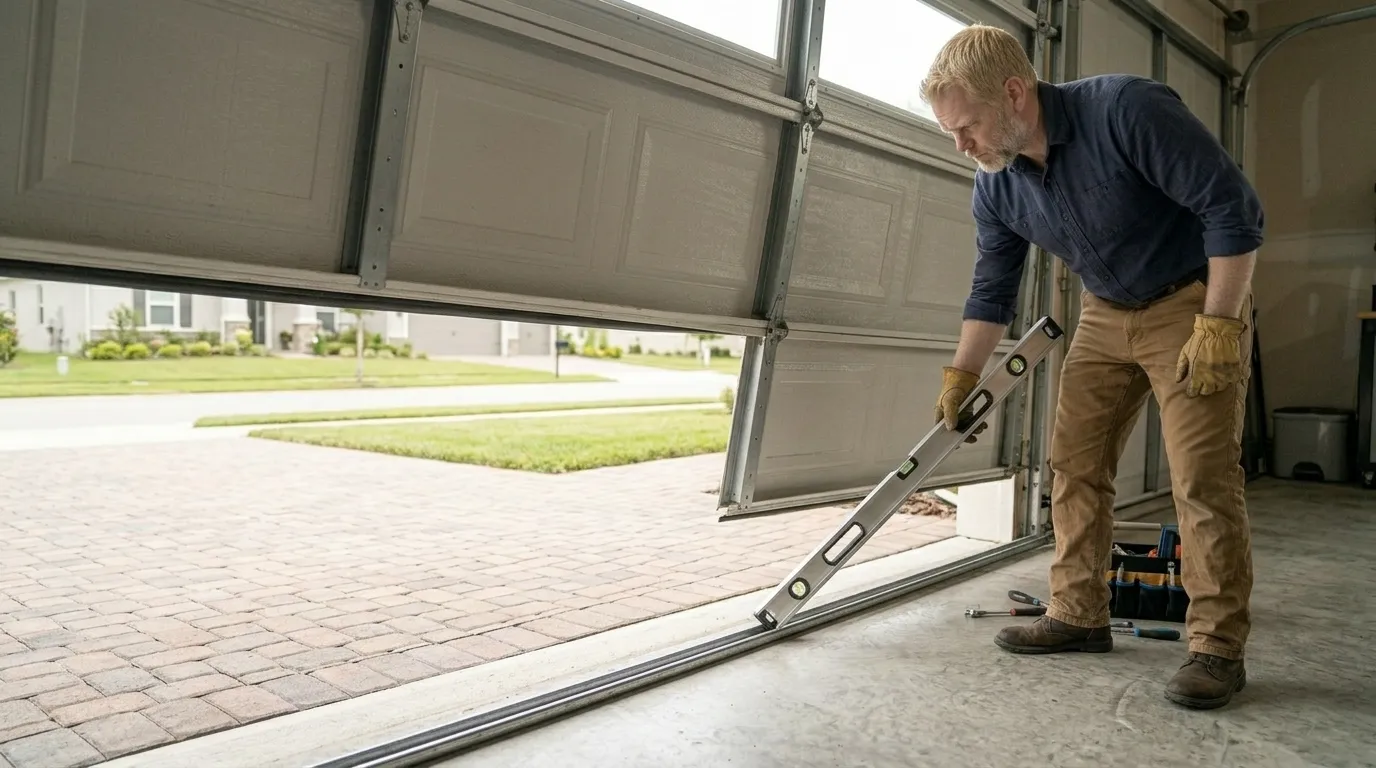
The most common call is an opener that runs but the door doesn't move, or moves partway and reverses. On older chain-drive units common across this service area's 1960s-70s housing stock, that's usually the drive gear stripped inside the motor housing - a plastic part that was never meant to outlast the house. A close second is a door that opens fine but won't close, which points to the safety sensors or a misaligned photo eye, not the opener's motor at all.
Remote range dropping off gradually, rather than failing outright, points to a weakening logic board or a battery issue in the remote itself - worth checking before assuming the whole unit needs replacing. A grinding or clicking sound with no movement is almost always mechanical: a broken chain link, a stripped gear, or a slipped belt.
If the opener light blinks a set number of times when you try to close the door, that's a manufacturer error code, and the count tells us where to start - we just need the model on site to read it correctly.
How to Book
If your opener is acting up, the details that speed things up on the call are the symptom (runs but doesn't move, moves and reverses, dead silent), the approximate age of the opener if you know it, and whether the house still has its original garage door hardware. Given the age spread in this area's housing - some homes from the late 1930s, most from the 1960s and 70s - knowing which era you're in helps us bring the right board and drive parts on the first trip instead of a second one.
We cover the full service area from this location, including the nearby communities within about a fifteen-mile radius. Book through the link below and we'll get a truck out with the parts likely to match your opener's age.
Talk to a Technician Before You Book
Describe what the door is doing and get a straight answer on what it likely needs.
Jobs Like Yours
Recent work from this service line.
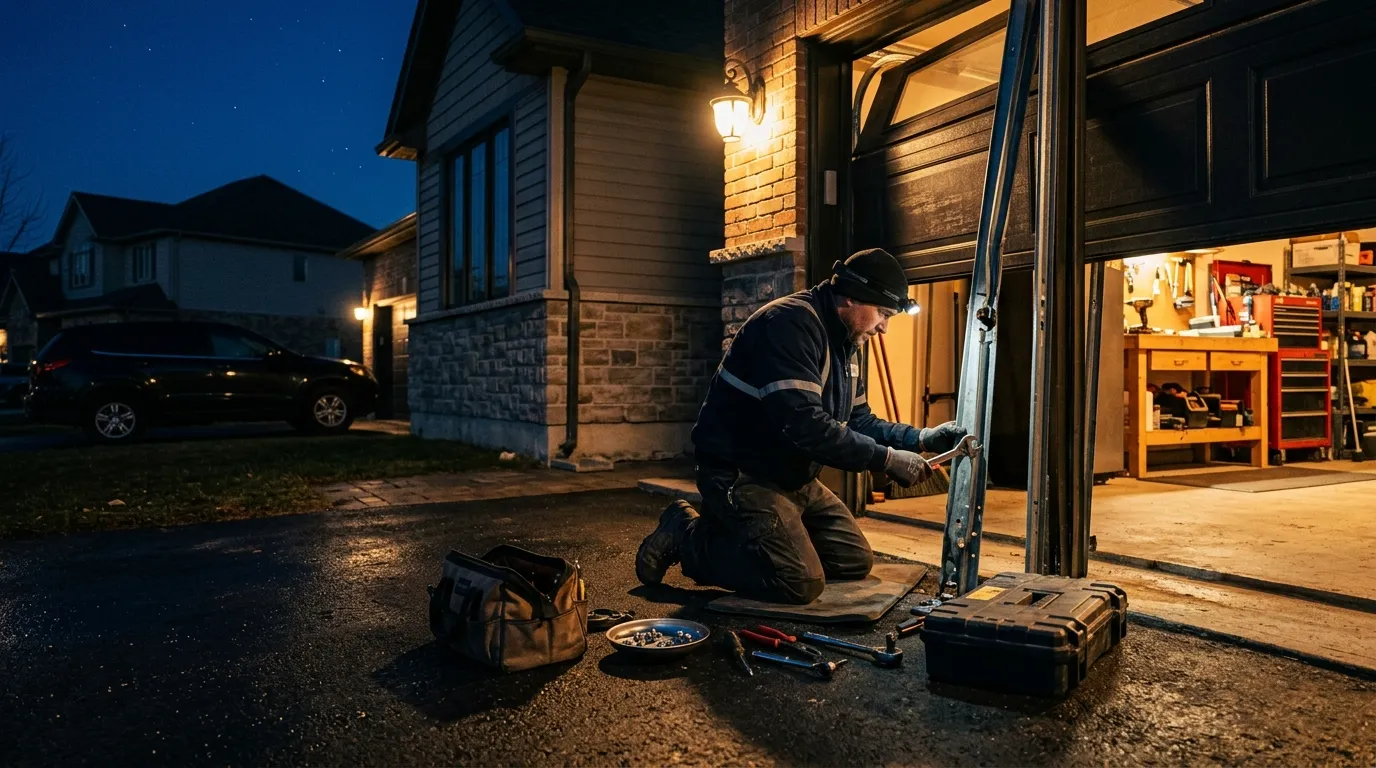
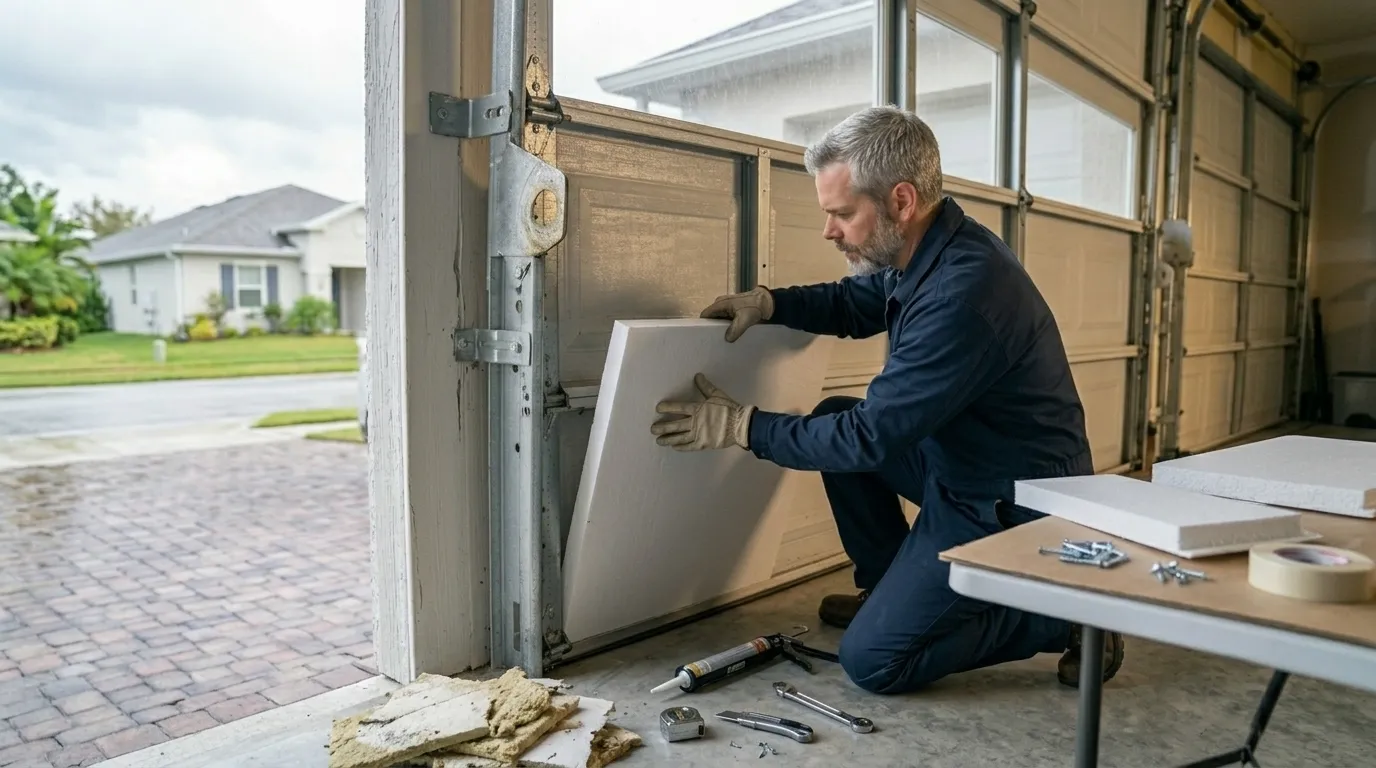
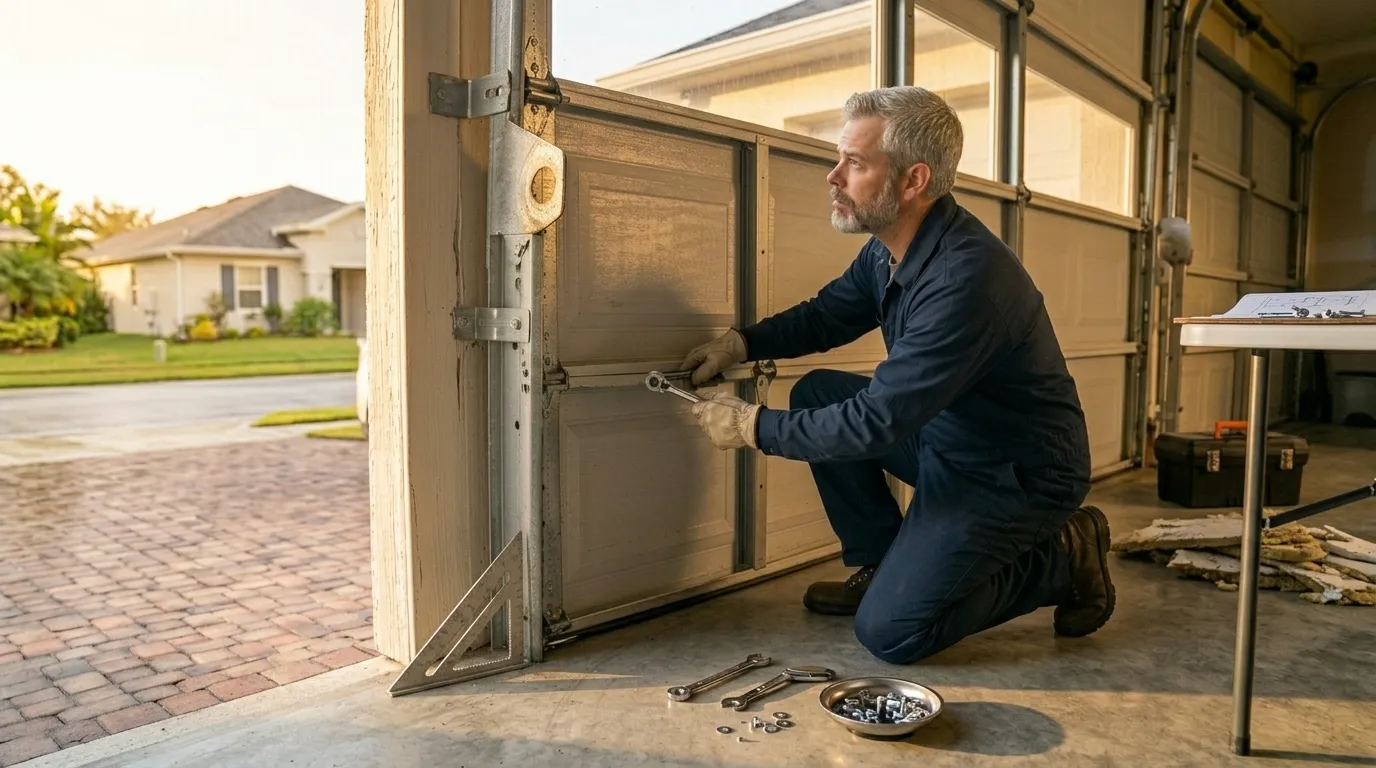
Why Orange Calls Us
Frequently Asked Questions
How old does an opener have to be before it's not worth repairing?
If the manufacturer no longer sells boards or drive gears for it, repair turns into a parts hunt that can take weeks. Given how much of the stock here dates to the 1960s and 70s, that point comes up more than you'd think. We'll tell you straight if your unit has hit that wall instead of billing you for a search that won't pan out.
Why does my opener work fine in the morning and struggle by afternoon?
That's usually a capacitor or motor winding that's aging out, not weather damage. Even in a mild climate, the daily temperature swing between morning and afternoon puts a small mechanical load on worn parts, and an opener already near the end of its life will show it at the warmer end of the day first.
Do you fix the opener or replace the whole unit?
Depends on what's actually broken. A stripped gear, worn belt, or bad board on an otherwise sound opener gets fixed. A unit old enough that parts aren't made anymore gets replaced, because chasing discontinued parts costs more in the end than a new opener.
My door won't close and the light blinks - what does that mean?
That's a manufacturer error code, and the number of blinks tells us where the fault is - usually the safety sensors or a limit switch, not the motor. We need the model on site to read the code correctly, so have that ready if you call in.
Need Garage Door Opener Repair for Orange, CA Homes?
Call now for straight answers on cost and timing.