Cable Repair in Norwalk
Broken Cable Repair for Norwalk's 1950s Garage Doors
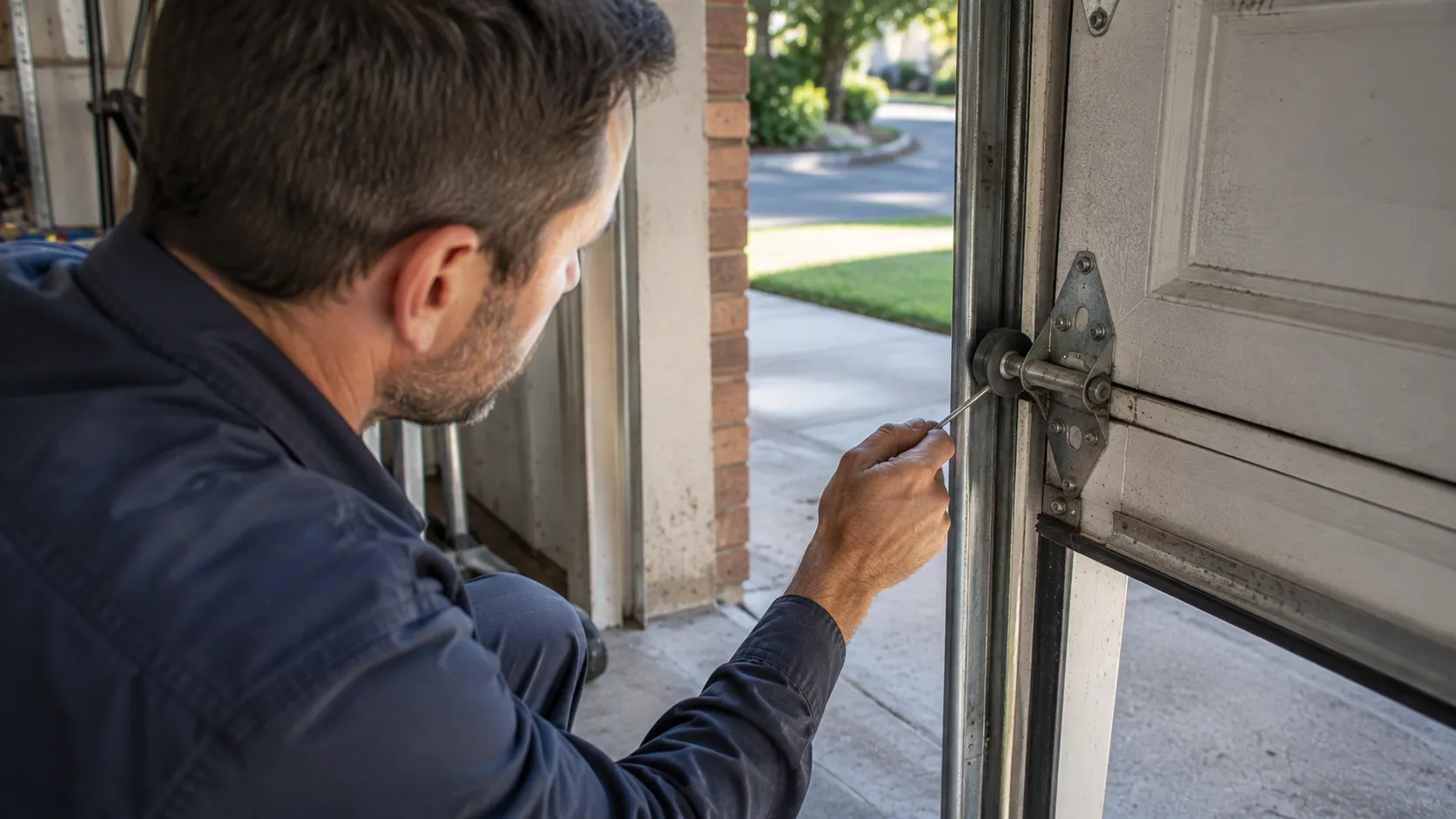
Norwalk's houses mostly went up around 1957 with extension-spring doors and pulley-run cables that fray with age. We drive in from Orange to fix broken cables on these older setups.
- Licensed & Insured
- Same-Area Service Calls
- Upfront Pricing
What Happens When You Call
-
1
Call or Request a Quote
Tell us what the door is doing and roughly how old the house is - that alone points us toward the likely part before a truck leaves.
-
2
On-Site Diagnosis
A tech checks the spring, cables, tracks, and opener in person and tells you plainly what is actually wrong.
-
3
Straight Price, No Surprises
You get a number before any work starts. It covers parts and labor, nothing added after the fact.
-
4
Fixed the Same Visit
Most repairs are done in one trip. If a part needs sourcing, we tell you that upfront instead of guessing.
How to Book
We're based in Orange, about 15 miles out, so there's no branch office or drop-in counter here in Norwalk. Booking is a call or a request through our site, and we work the job into the day's route rather than dispatching from a local yard. Tell us what the door is doing when you call - cable snapped and door won't budge, cable frayed and door's crooked on one side, cable jumped the pulley - because that changes what we bring on the truck.
Most of the calls we get from this area involve the older extension-spring setup rather than torsion cable drums, which is worth mentioning up front since it changes the parts we load before we leave Orange. If you know the door is a single flat panel with springs running along the horizontal tracks rather than a shaft over the header, say so - it saves a second trip.
We don't claim same-day arrival here the way a local shop might, since every job in Norwalk is a drive for us. What we do is confirm a window before we leave, so you're not sitting on a call that goes stale. Check the service overview for what a cable job generally involves, and the Norwalk area page for the rest of what we cover out this way.
How Long It Takes
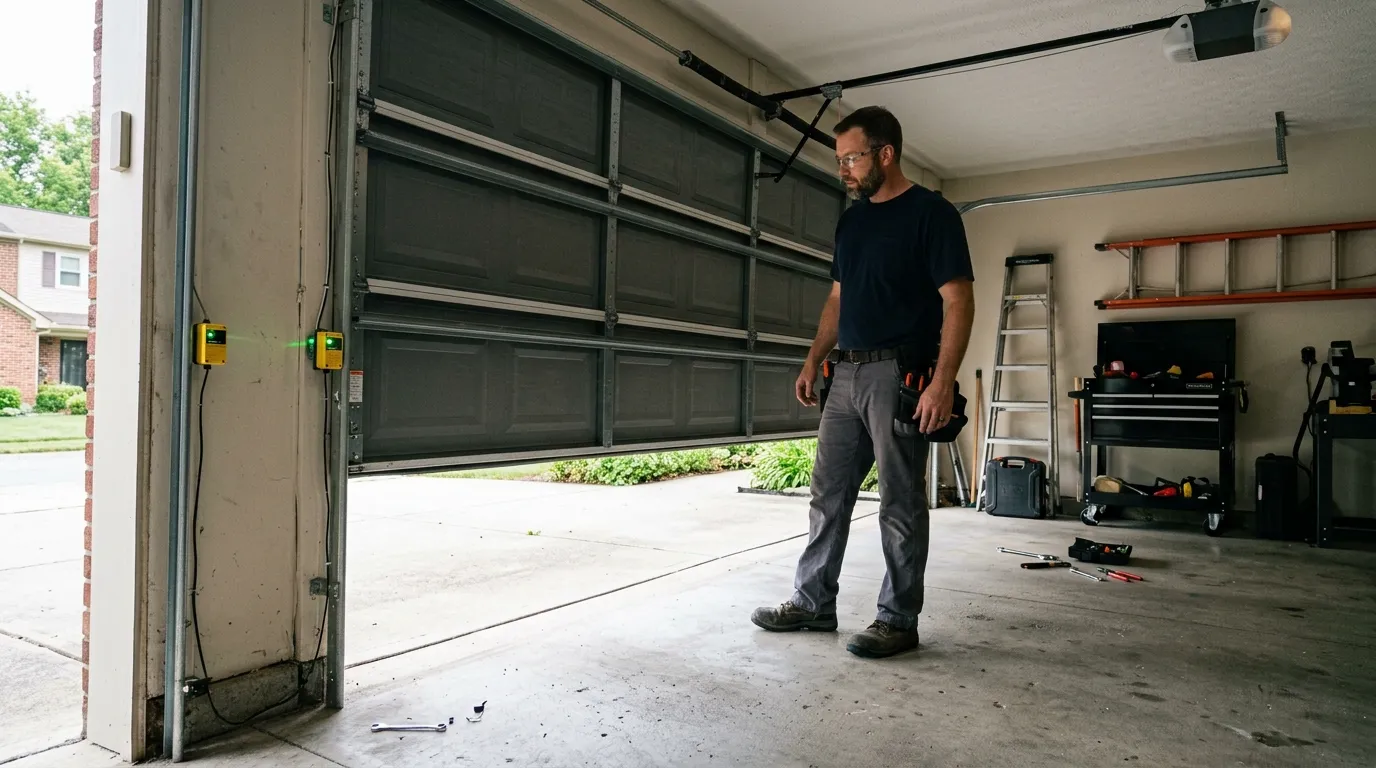
A straight cable swap on a residential door - one snapped cable, hardware otherwise sound - is usually the fastest repair we run, faster than a spring job or an opener swap. Two cables on an older extension-spring door, since we replace both sides even if only one broke, adds time but not much. Where it slows down is the pulley and drum condition underneath - on doors from the 1950s and 60s era common in this part of the county, the pulley wheel itself is often the actual problem, not just the cable, and that means an extra part and an extra half hour we didn't budget for on the phone.
We don't quote a fixed number of minutes over the phone because we haven't seen the door, and guessing wrong on-site wastes your afternoon and ours. What we can tell you is that cable work on its own rarely turns into an all-day job unless the track or roller assembly is also shot, which happens more on doors that have been running on the original 1960s-era hardware without a rebuild.
Doing It Yourself
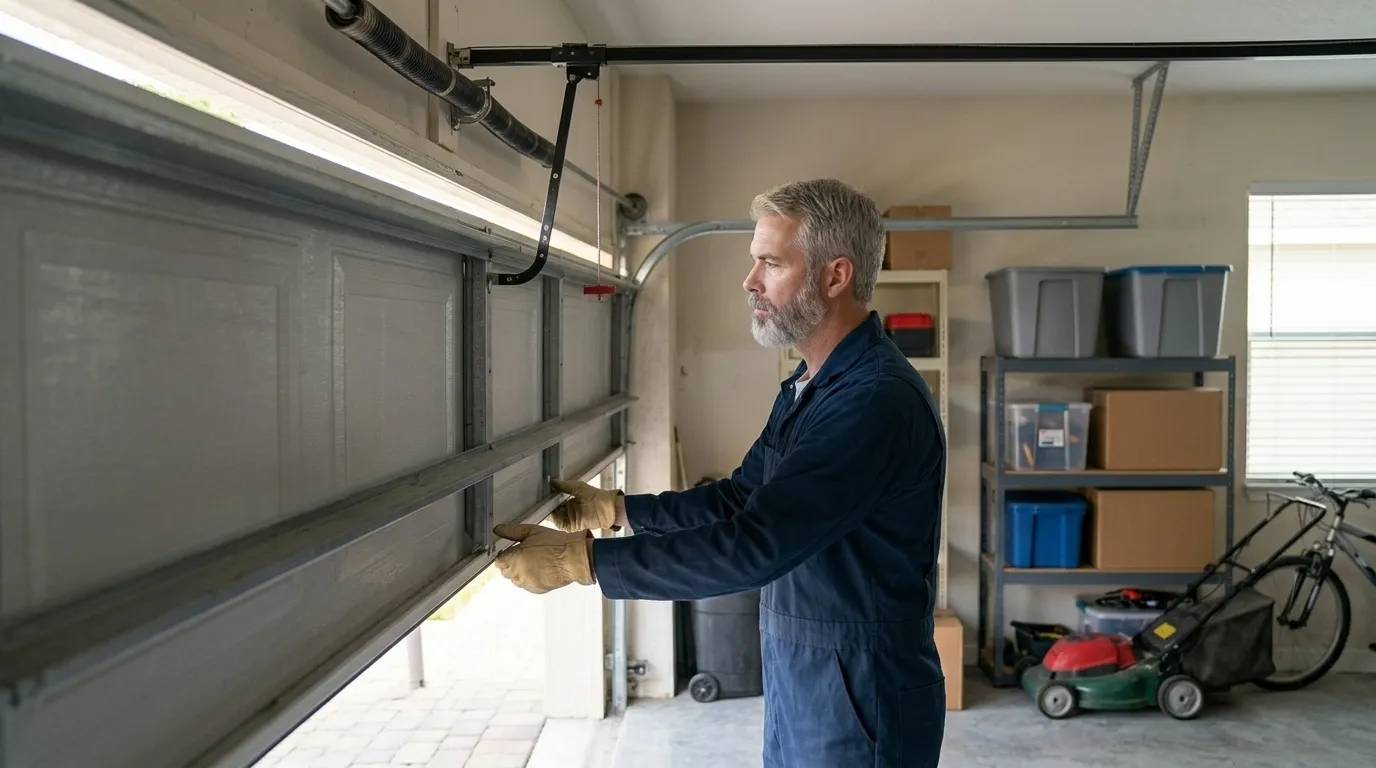
A cable under tension from an extension spring is not a safe DIY fix, and we'll say that plainly rather than soften it. The spring stretches when the door is down, and if you unhook a cable while that tension is still loaded, it can whip hard enough to break a finger or worse. If the door is already down and stuck because the cable let go, the safest thing you can do yourself is leave it down, unplug the opener so it doesn't try to force the track, and wait for someone who does this for a living.
Where a homeowner can reasonably help themselves: checking whether the cable derailed from its pulley versus snapped outright, since that's visible without touching anything under tension, and clearing the area so we're not working around a parked car or storage bins the moment we get there. Beyond that, we'd rather you call than improvise - a cable job done wrong usually turns into a door-off-the-track job, and that's a bigger bill for everyone.
Why It Happens Here
Most of the housing stock in this part of the service area went up in the 1938 to 1995 range, and Norwalk's own build era sits around 1957 - squarely in the postwar boom that put in a lot of the extension-spring, cable-and-pulley garage doors that are still running today. That hardware wasn't built for a sixty-plus-year service life, and the cable is usually the first thing to go because it's the part doing the most flexing every time the door moves.
The mild coastal-influenced climate through here actually works in the door's favor compared to places with hard freezes or heavy salt air - cables don't rust through the way they might elsewhere. What gets them instead is straight fatigue: thousands of open-close cycles wearing a thin steel cable down at the same bend point over the pulley, especially on doors nobody's serviced since they were installed. On a door built to 1957 specs, that's a lot of decades of wear on parts that were never meant to be inspected, let alone replaced, until they fail.
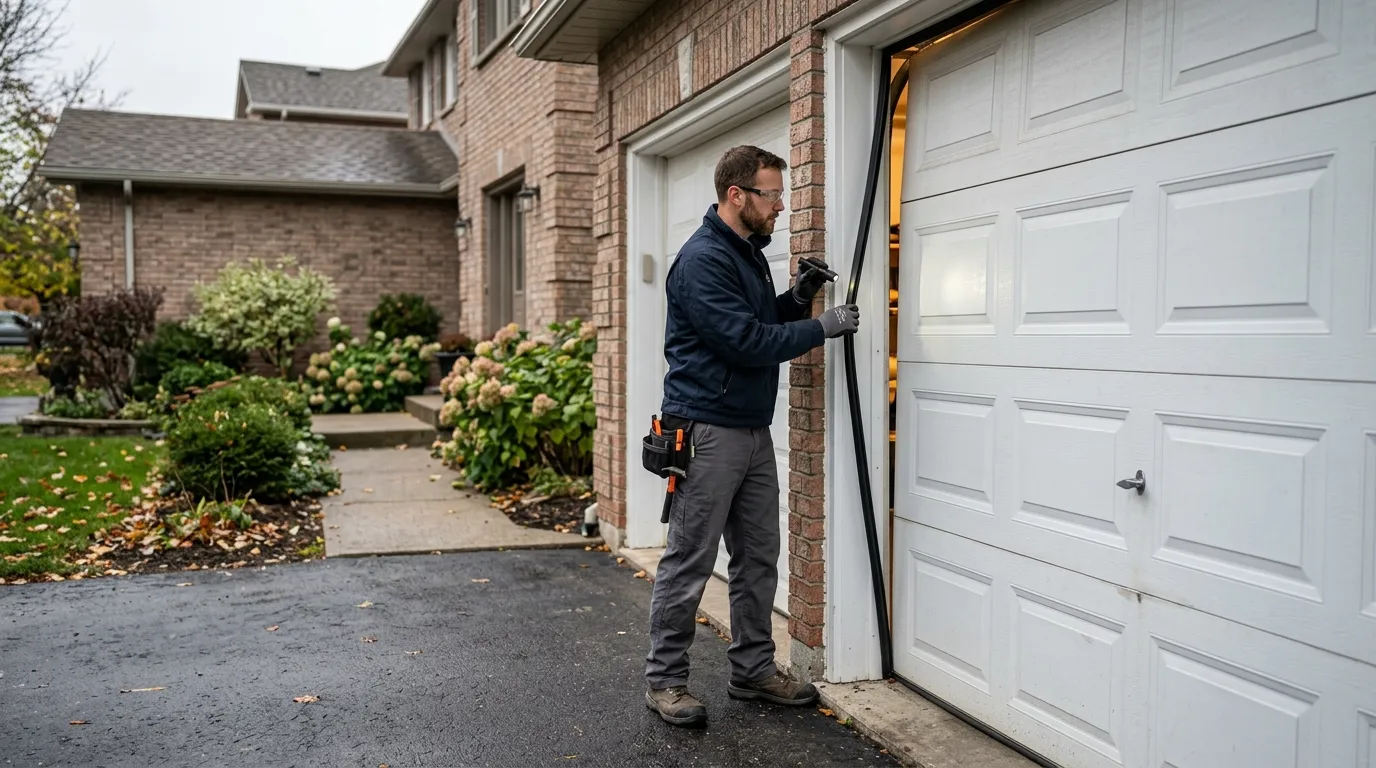
Talk to a Norwalk Technician First
Describe what the door is doing and get a straight answer on what it likely needs.
Other Garage Door Services in Norwalk
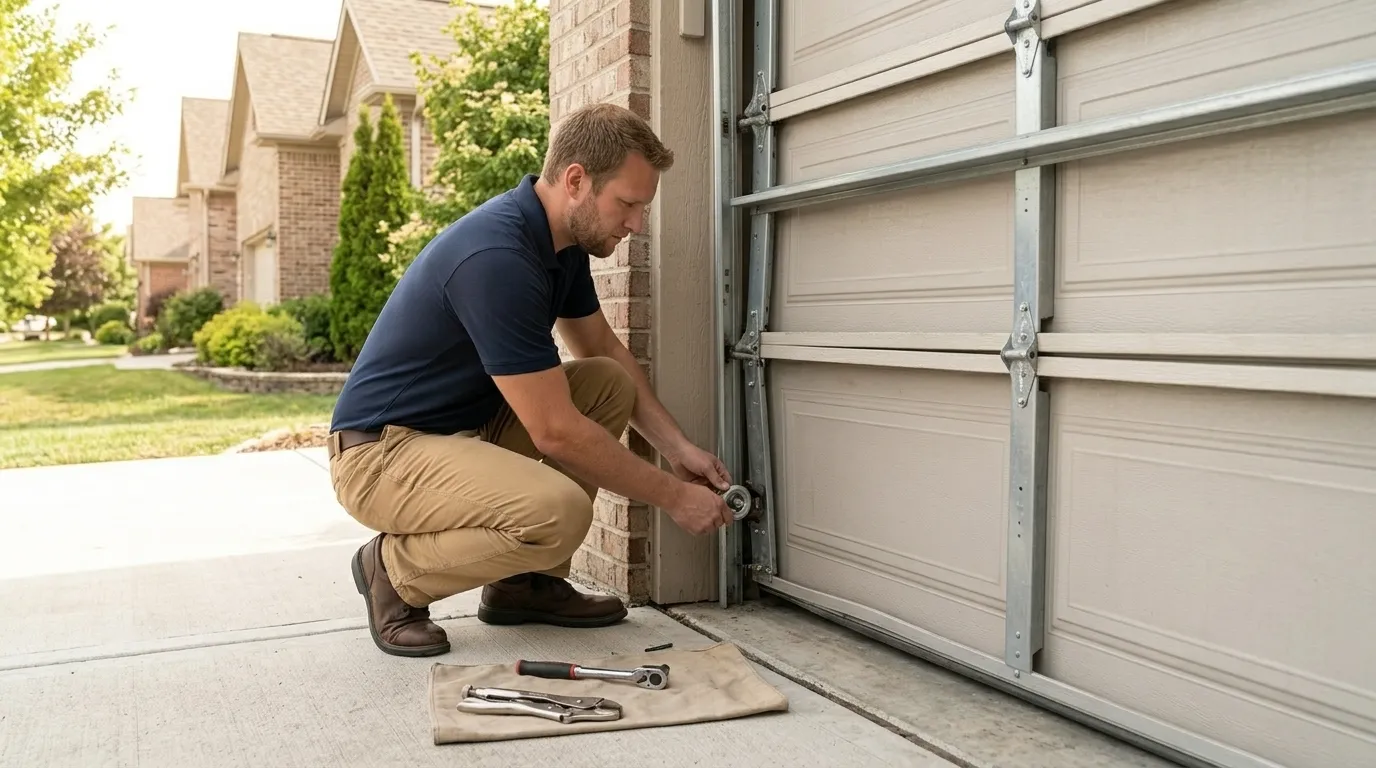
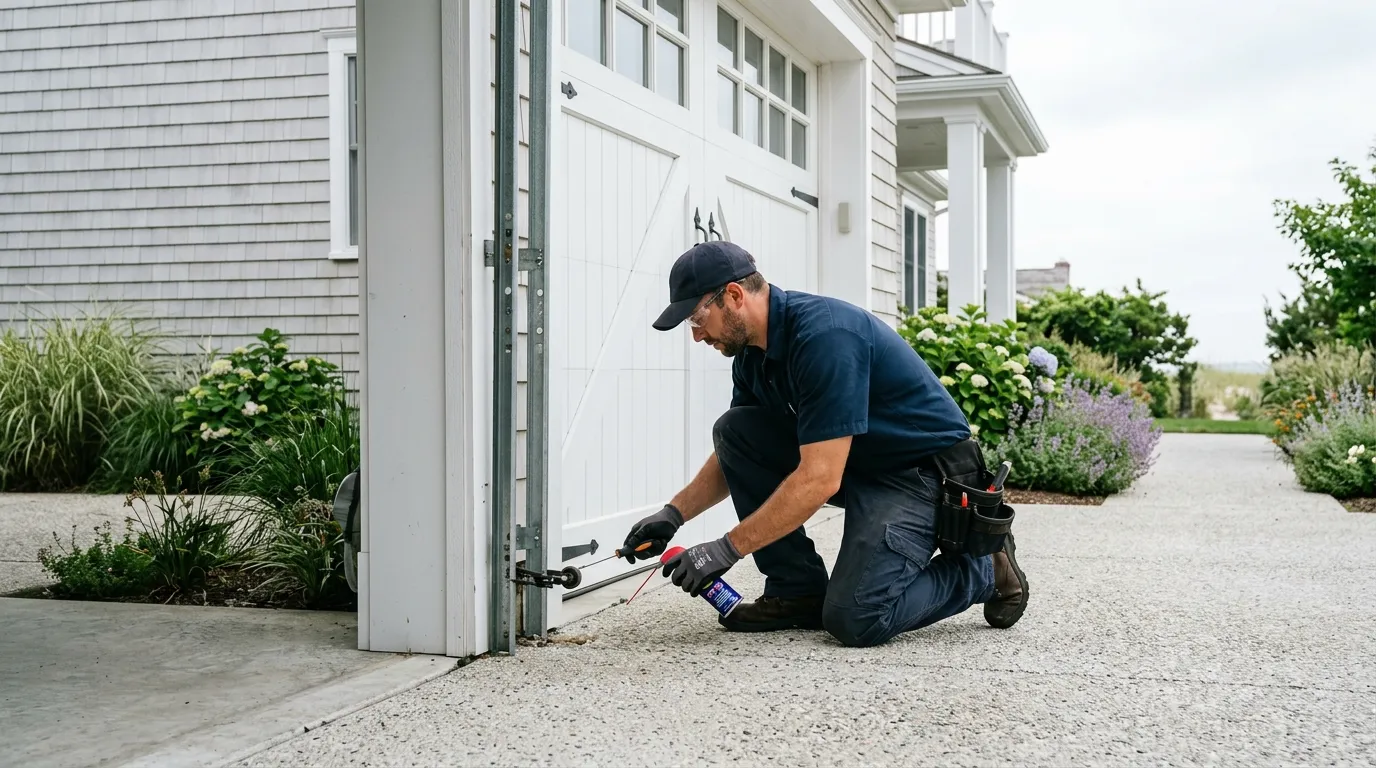
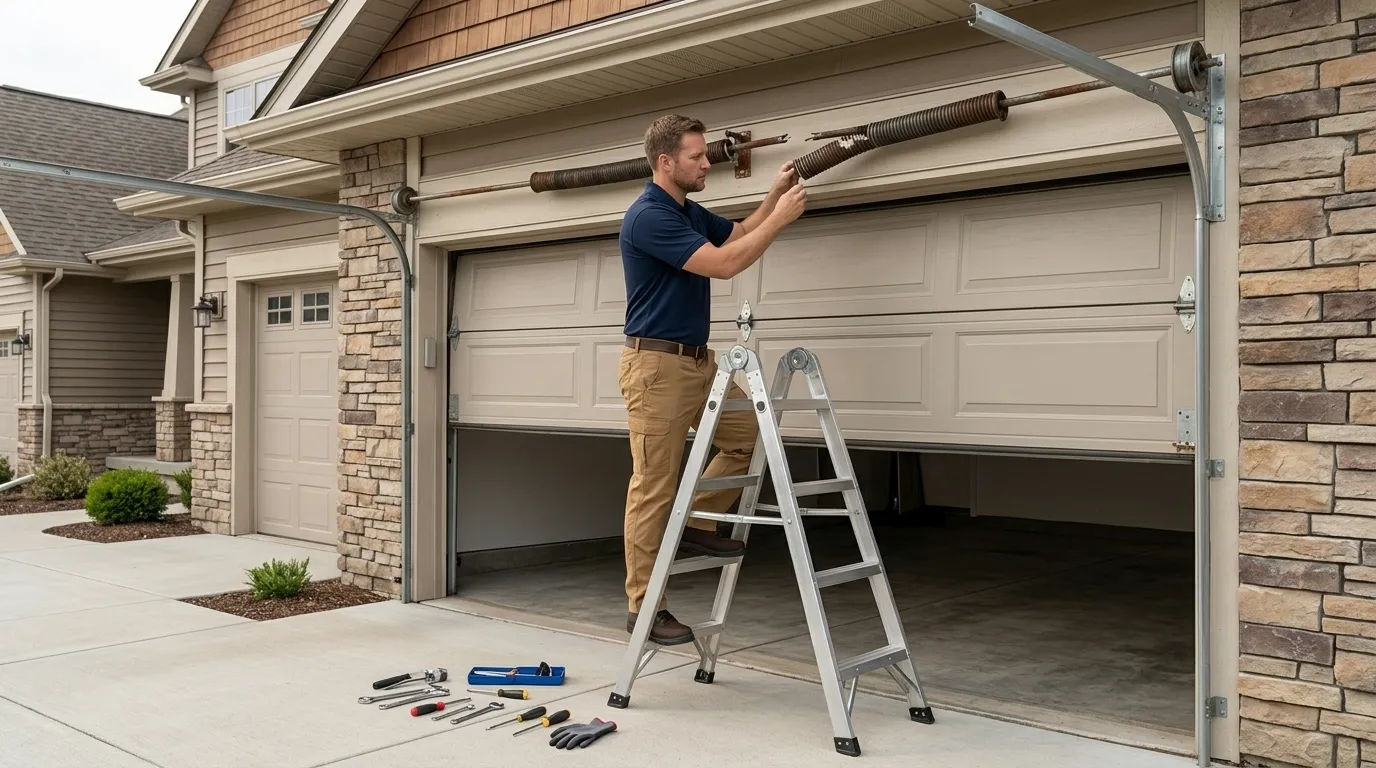
Recent Work in Norwalk
A look at jobs our crew has been on nearby.
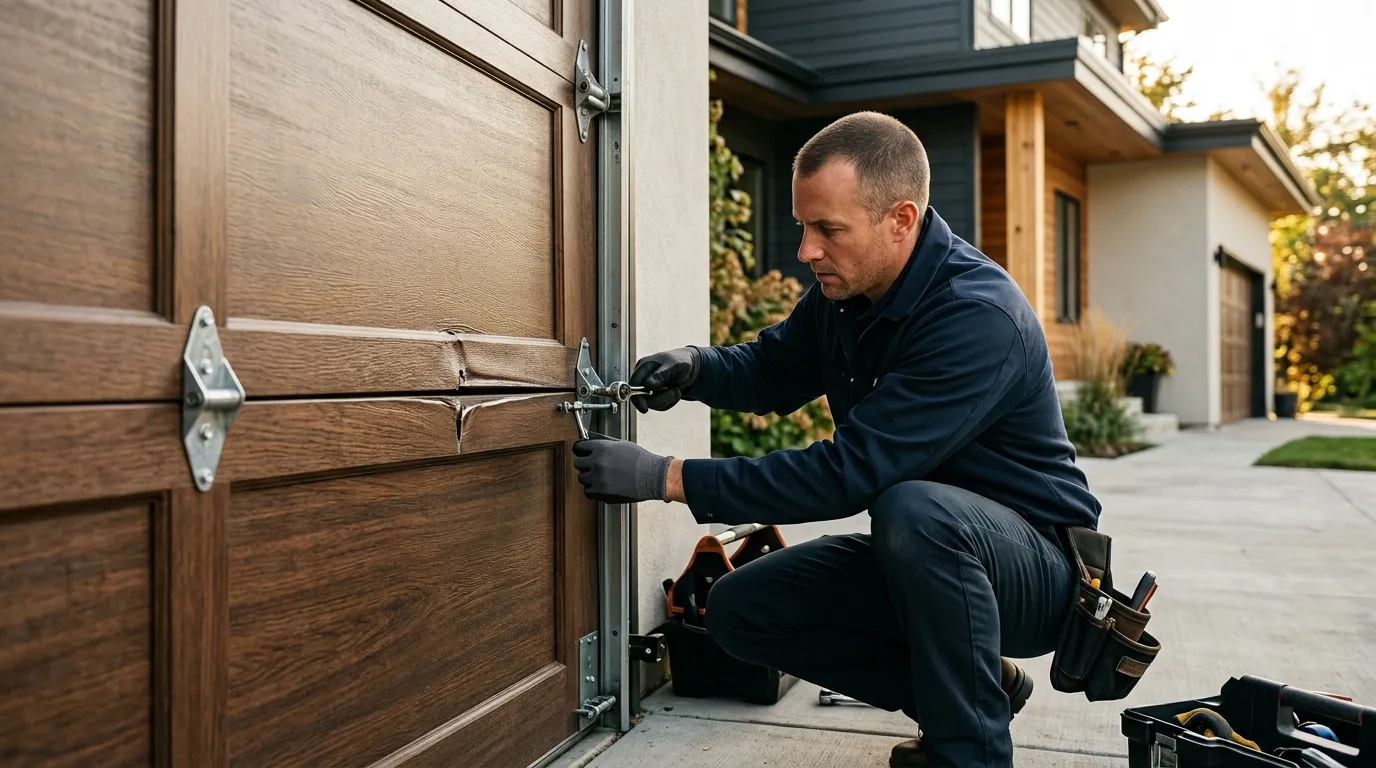
Why Norwalk Calls Us
Frequently Asked Questions
Why does my garage door cable keep fraying at the same spot?
On older extension-spring doors, the cable runs over a fixed pulley every time the door cycles, and it bends at the same point thousands of times over the years. That repeated flex is what frays steel cable, not rust or weather in this climate. Once you see fraying at one spot, it's near the end of its life - better to replace it than wait for it to snap.
Do you carry cable parts on the truck for older Norwalk-area doors?
We load based on what you describe on the call, and since a lot of the doors out this way are the older extension-spring style rather than torsion drums, we ask specifically which setup you have before we leave Orange. That one detail changes the parts we bring and avoids a second trip.
Is a broken cable the same as a broken spring?
No, and it matters which one failed. A broken spring usually means the door is heavy and won't lift at all. A broken or derailed cable often means the door hangs crooked, stuck at an angle, because one side is still under tension and the other isn't. Both need a professional, but the fix and the parts are different.
Need Cable Repair in Norwalk?
Call now for straight answers on cost and timing.