Opener Repair in Norwalk
Opener Repair for Norwalk's 1950s Garage Doors
Norwalk homes built around 1957 often carry chain-drive openers and older photo-eye setups. We diagnose and repair openers here, dispatched from Orange, 15 miles out.
- Licensed & Insured
- Same-Area Service Calls
- Upfront Pricing
What Happens When You Call
-
1
Call or Request a Quote
Tell us what the door is doing and roughly how old the house is - that alone points us toward the likely part before a truck leaves.
-
2
On-Site Diagnosis
A tech checks the spring, cables, tracks, and opener in person and tells you plainly what is actually wrong.
-
3
Straight Price, No Surprises
You get a number before any work starts. It covers parts and labor, nothing added after the fact.
-
4
Fixed the Same Visit
Most repairs are done in one trip. If a part needs sourcing, we tell you that upfront instead of guessing.
How to Book
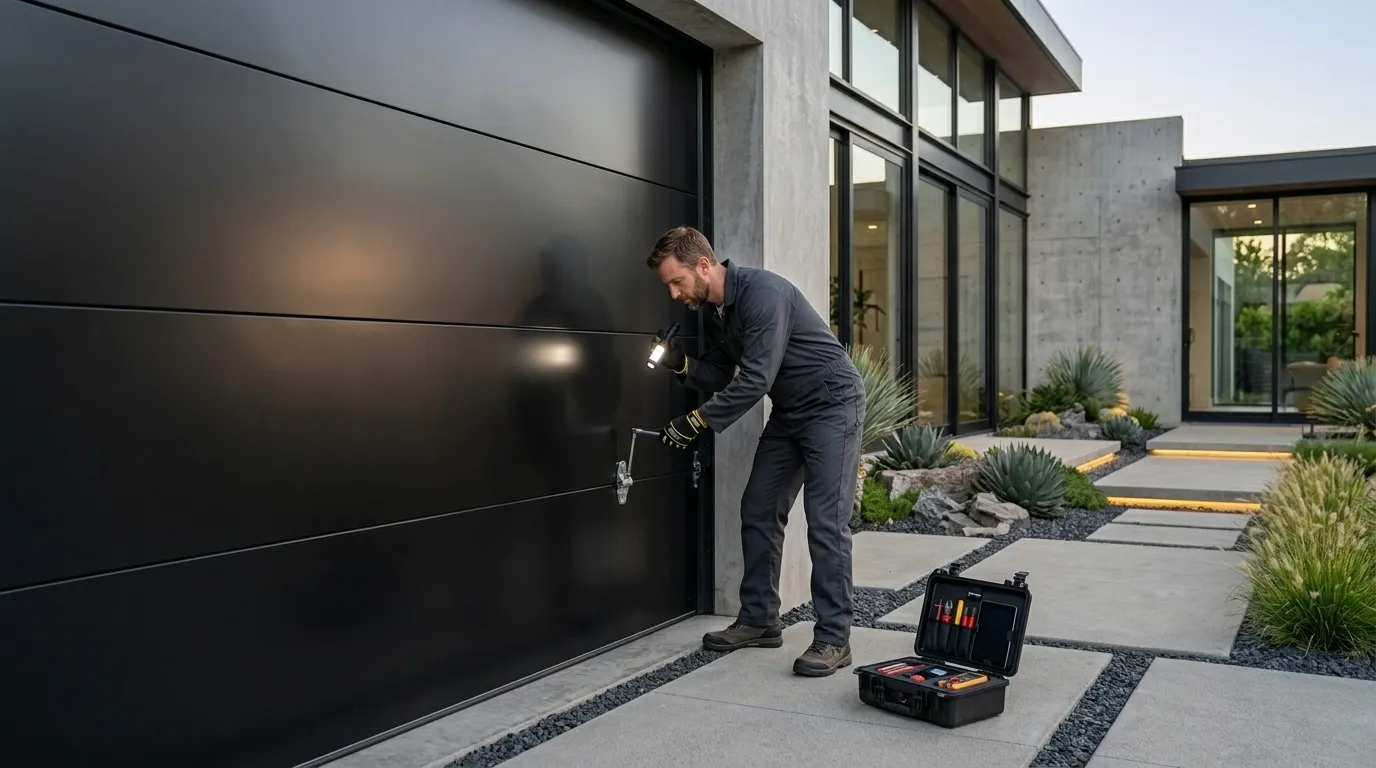
Call or use the site to set up an opener repair visit. We work out of Orange, about 15 miles from Norwalk, so we ask a few questions up front - the opener's brand if you can read it off the housing, whether it's chain, belt, or screw drive, and whether the door still moves by hand when you disconnect the carriage. That tells us what to load on the truck before we head your way.
Norwalk's housing stock, mostly built around 1957, means we still see a fair number of older chain-drive units bolted to the original framing, sometimes retrofitted decades later with a newer head unit and a mismatched rail. If yours has been swapped out more than once, tell us that too - it changes what we bring.
We don't keep a branch in Norwalk. Every job here is a trip from Orange, which is worth knowing if you're hoping for a same-hour fix - we'll give you a window when you call, not a guess before we've heard what's wrong. Book from the Norwalk area page or look at general opener work on the Orange opener repair page.
How Long It Takes
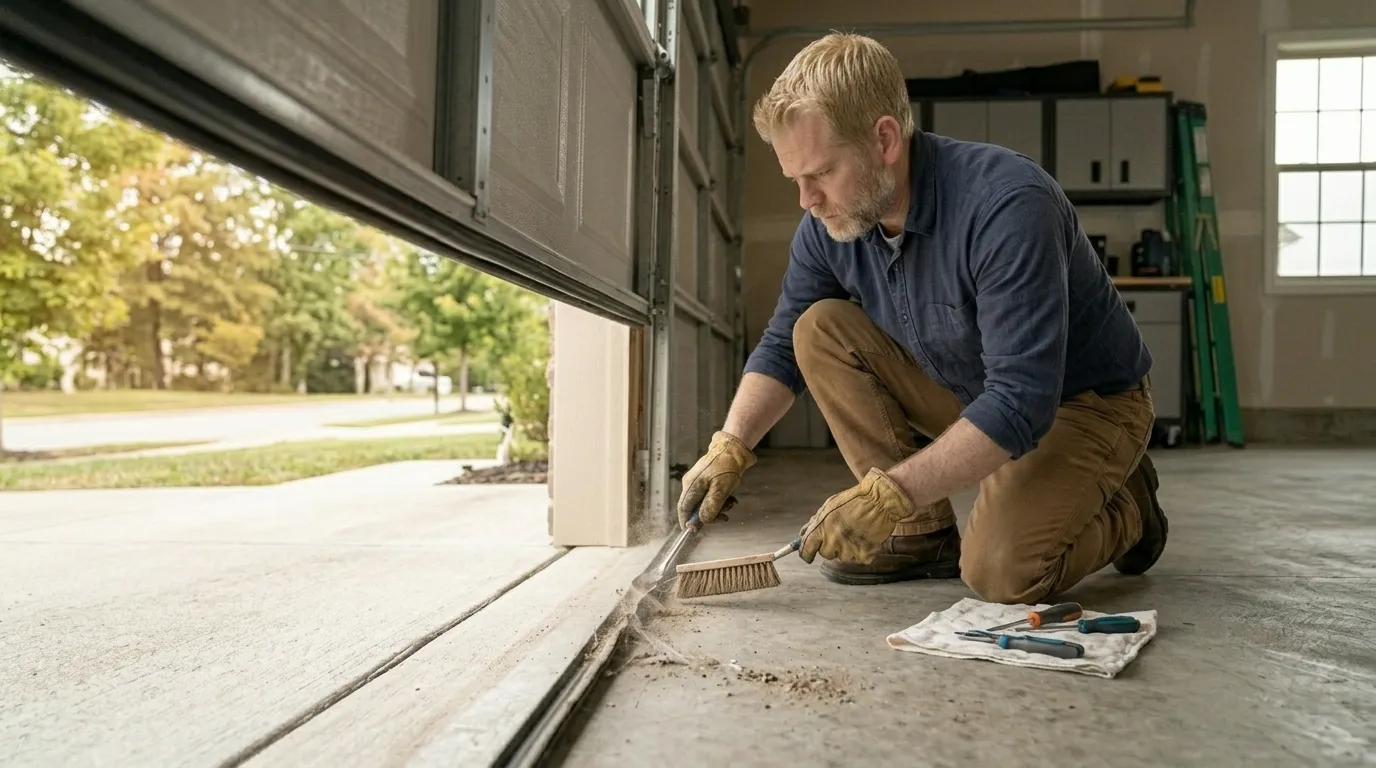
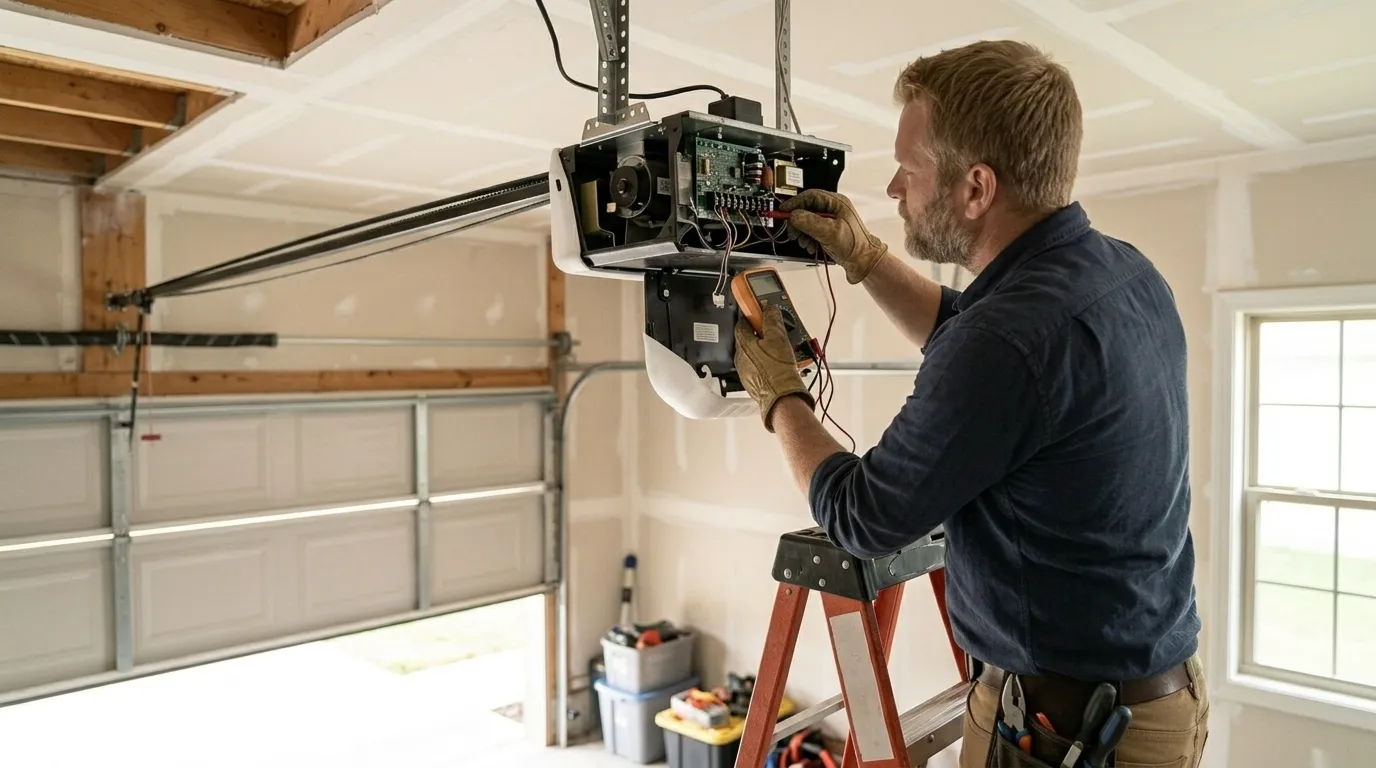
Most opener repairs - a burnt-out logic board, a stripped gear, a photo-eye that's drifted out of alignment - run under an hour once the truck is on site. The variable in Norwalk is what's behind the wall. Houses from the late 1950s often have shallower header clearance than what openers are designed for today, so mounting a new head unit sometimes means building out a bracket rather than a straight bolt-in.
That adds time. If the belt or chain has jumped the sprocket but the motor itself is fine, that's a fifteen-minute fix. If the whole unit needs to come down because the drive gear has stripped past the point of a rebuild kit, plan for the better part of a morning, plus a possible second trip if the replacement unit isn't one we're carrying that day.
We don't stock every opener model on every truck - a specific circuit board for an older unit can mean a short wait on the part.
Doing It Yourself
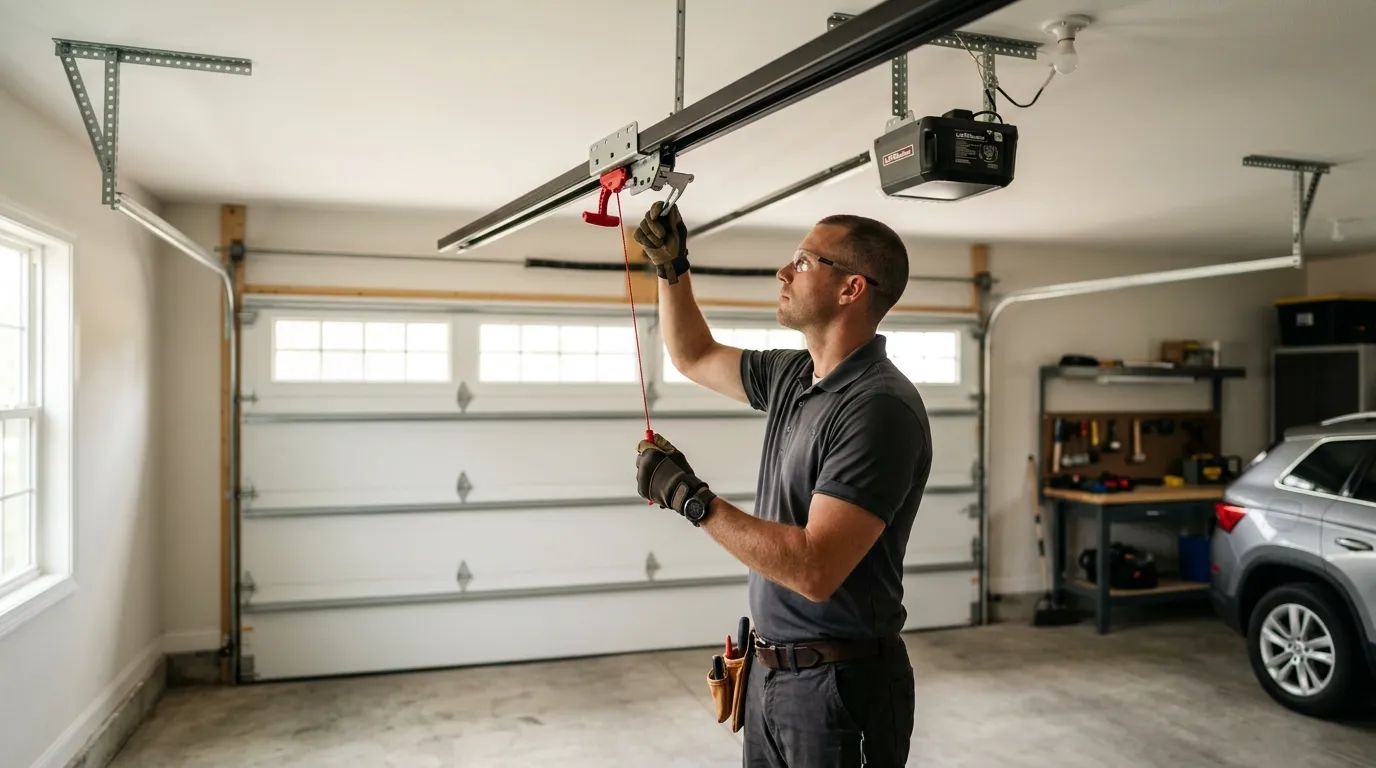
There's a real split between what's safe to check yourself and what isn't. Checking the wall switch, the battery in the remote, and whether the photo-eye sensors are knocked out of line - all fine, all things you can do with a flashlight and five minutes. Opening the opener housing to get at the circuit board, or pulling the motor off its mount, is where we'd tell you to stop.
On a lot of Norwalk's 1957-era garages, the opener has been retrofitted at least once, which means wiring that doesn't match the diagram in whatever manual you find online. Guessing at that wiring risks the board, not just your afternoon. If the door binds on the track before you even get to the opener, that's usually a hardware problem, not an opener problem, and no amount of opener troubleshooting will fix a door that's dragging.
Why It Happens Here
Norwalk's housing went up mostly in the late 1950s - 1957 is the rough median here - which was well before garage door openers were standard equipment in this part of the county. Openers in these garages are almost always retrofits, added years or decades after the house was built, onto doors and track hardware that predate them. That mismatch is the root of a lot of the calls we get: a modern opener head straining against an old, heavy wood-panel door, or a safety reversal system trying to work with sensors mounted on brackets that were never designed for them.
The mild coastal-influenced climate here means the openers themselves don't fail from heat or cold the way they might elsewhere - F3 mild temperate conditions are gentle on the electronics. What wears out is mechanical: gears, belts, and drive components stressed by doors heavier than the opener was ever sized for. It's a hardware-era problem more than a weather problem, and it's the reason we ask about the door's age before we ask about the opener's brand.
Talk to a Norwalk Technician First
Describe what the door is doing and get a straight answer on what it likely needs.
Other Garage Door Services in Norwalk
Recent Work in Norwalk
A look at jobs our crew has been on nearby.
Why Norwalk Calls Us
Frequently Asked Questions
Do you have a branch in Norwalk?
No. We're based in Orange, about 15 miles away, and every Norwalk job is a dispatched visit from there. We'll give you a time window when you call rather than promise an on-the-spot response.
Why does my opener strain even though it's new?
A lot of Norwalk garages date to around 1957, before openers were standard. If the original heavy panel door is still in place, a new opener is often working harder than it was built for. Sometimes the fix is the door hardware, not the opener.
Can you get parts for an older opener model?
Sometimes, sometimes not - we carry common belt, chain, and logic board parts on the truck, but an older or discontinued opener model can mean ordering a specific part and a short second visit.
Is it worth fixing an opener from a retrofit decades ago?
Depends on the fault. A worn gear or sensor is usually a straightforward fix. A dead board on a very old unit sometimes costs close to a new opener to source parts for - we'll tell you honestly which side of that line yours falls on.
Need Opener Repair in Norwalk?
Call now for straight answers on cost and timing.