
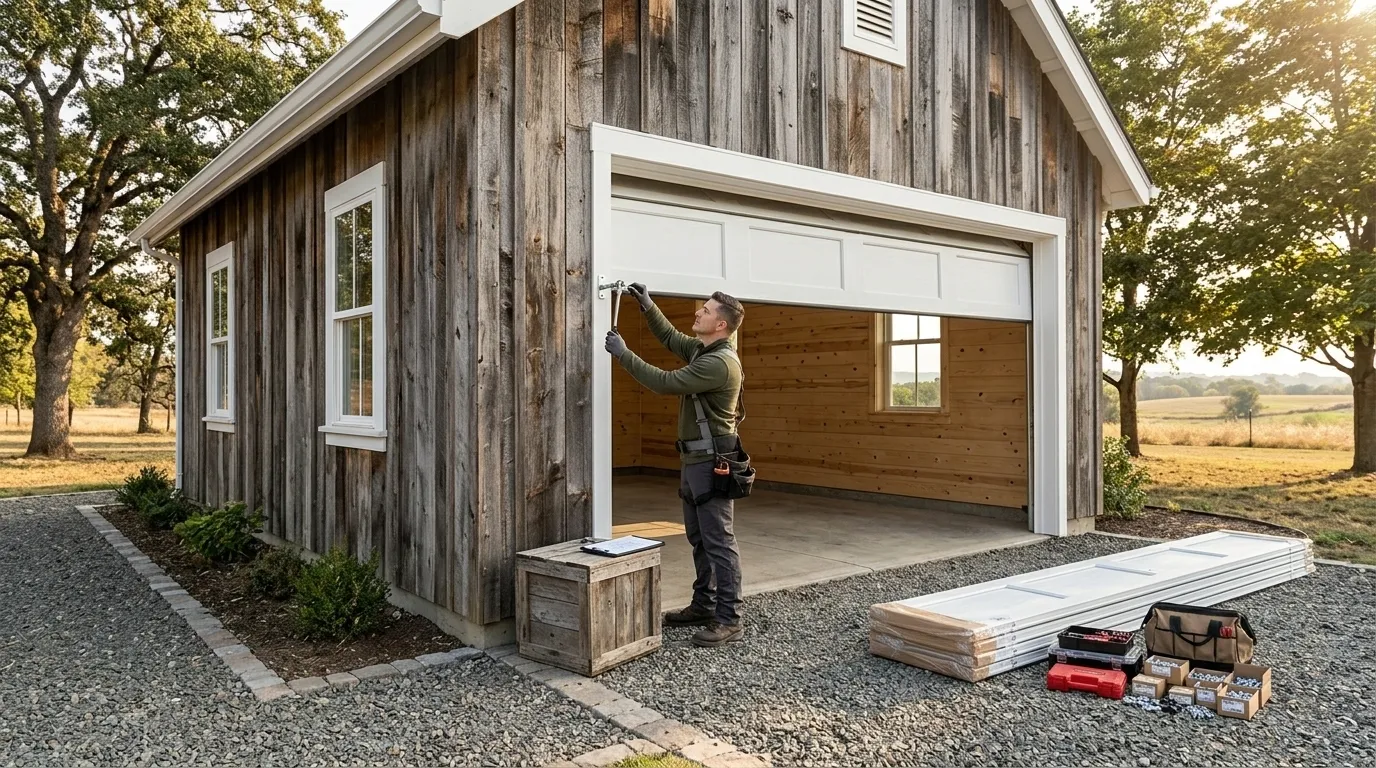
Cable Repair in Lakewood
Cable Repair for Lakewood Garage Doors
Cable repair for Lakewood's 1957-era garage doors. We drive 16 miles from Orange to fix snapped or frayed cables on original drums and tracks.
- Licensed & Insured
- Same-Area Service Calls
- Upfront Pricing
What Happens When You Call
-
1
Call or Request a Quote
Tell us what the door is doing and roughly how old the house is - that alone points us toward the likely part before a truck leaves.
-
2
On-Site Diagnosis
A tech checks the spring, cables, tracks, and opener in person and tells you plainly what is actually wrong.
-
3
Straight Price, No Surprises
You get a number before any work starts. It covers parts and labor, nothing added after the fact.
-
4
Fixed the Same Visit
Most repairs are done in one trip. If a part needs sourcing, we tell you that upfront instead of guessing.
Doing It Yourself
A garage door cable is not a good first DIY job, and we'll say that plainly. The cable is holding back a door that weighs more than most people guess, and it's working against a spring that's still under load even when the door looks still.
If a cable has already snapped, the door can drop hard and fast the second the last strand goes. If it's just frayed, pulling on it to test it is how the rest of the strands go while your hand is near the drum.
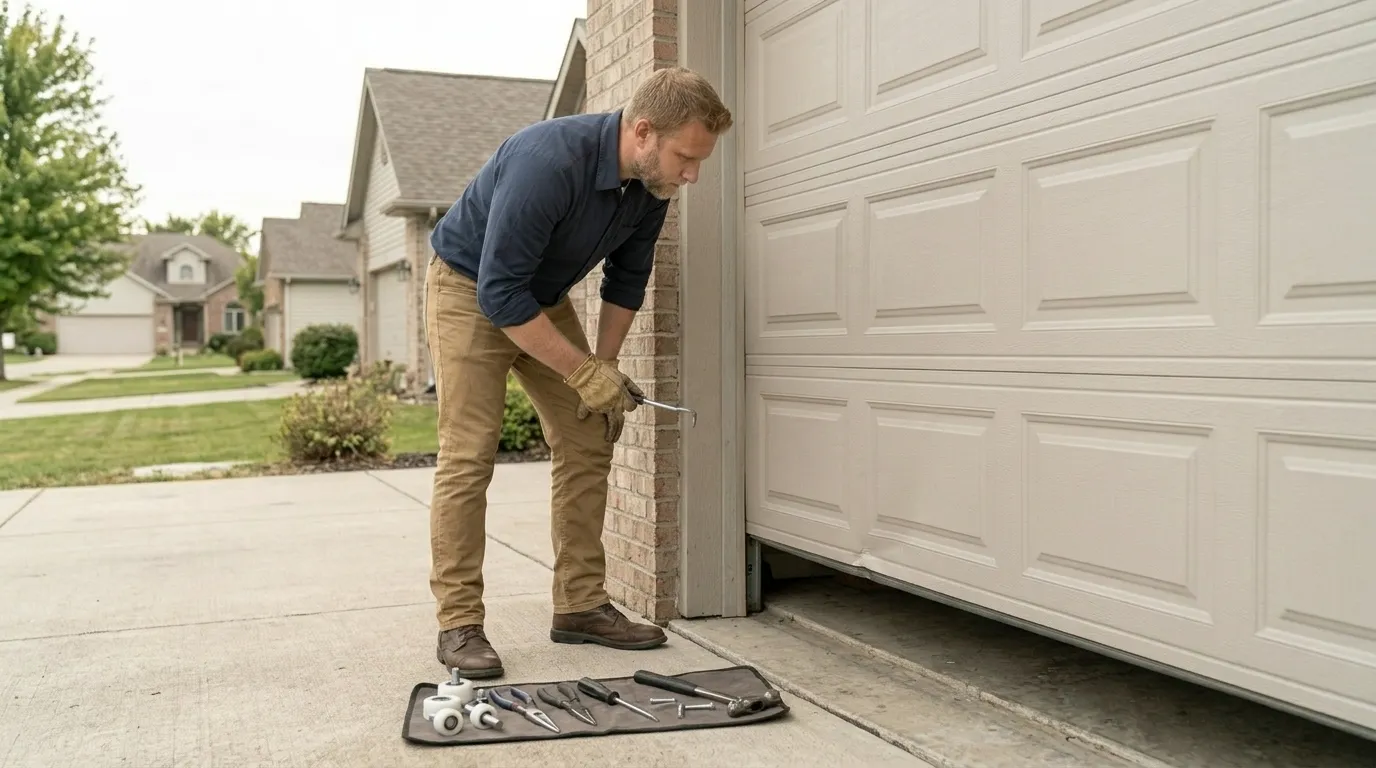
What you can safely do: look. Check if the cable is fraying near the bottom bracket or near the drum at the top of the track, check if the door is hanging crooked on one side, and check if the door will only go up a few inches before stopping.
Write down what you see and when it started. That's useful information for whoever comes to fix it, whether that's us or someone else.
We travel to Lakewood from Orange, about 16 miles out, so we're not going to pretend we can beat a same-hour walk-in the way a shop with a local yard might frame it. What we can do is get the right cable length and drum size for the job before we leave, which matters more on this street than it does on a newer build.
The Symptom
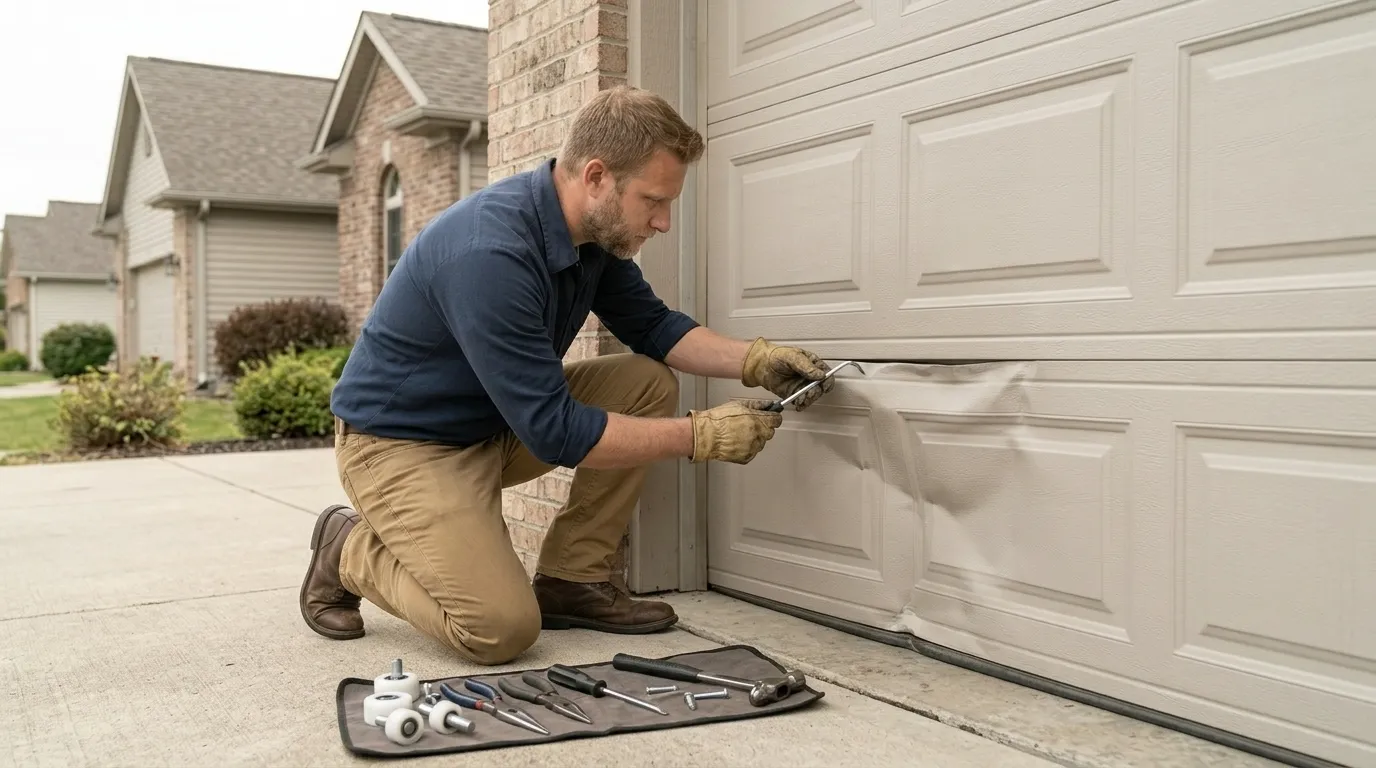
Lakewood's housing stock centers on 1957, and that era of garage door hardware tends to run standard-lift drums with cables sized for a lighter, older-style sectional or one-piece door than what gets installed today. When a cable on one of these goes, you'll usually see the door hang at an angle, low on the side where the cable failed, sometimes catching on the track on that side.
A fully snapped cable often shows up as the door refusing to move at all, or moving a few inches and stopping dead as the opener's safety sensor reads the imbalance. A fraying cable gives you warning first: a visible kink or splayed wire near the bottom bracket, a grinding or popping sound as the last good strands take the load, or the door starting to drift instead of sitting level when it's down.
Because this area's climate stays mild year-round, we don't see the cable corrosion that shows up in places with hard freeze-thaw cycles or heavy salt air. What we see instead is straightforward wear: decades of cycles on original or first-replacement cable, sometimes cable that was resized wrong for the drum on a prior repair. That mismatch is common enough on 1950s houses that it's worth checking before assuming the new cable is the same spec as the old one.
How Long It Takes
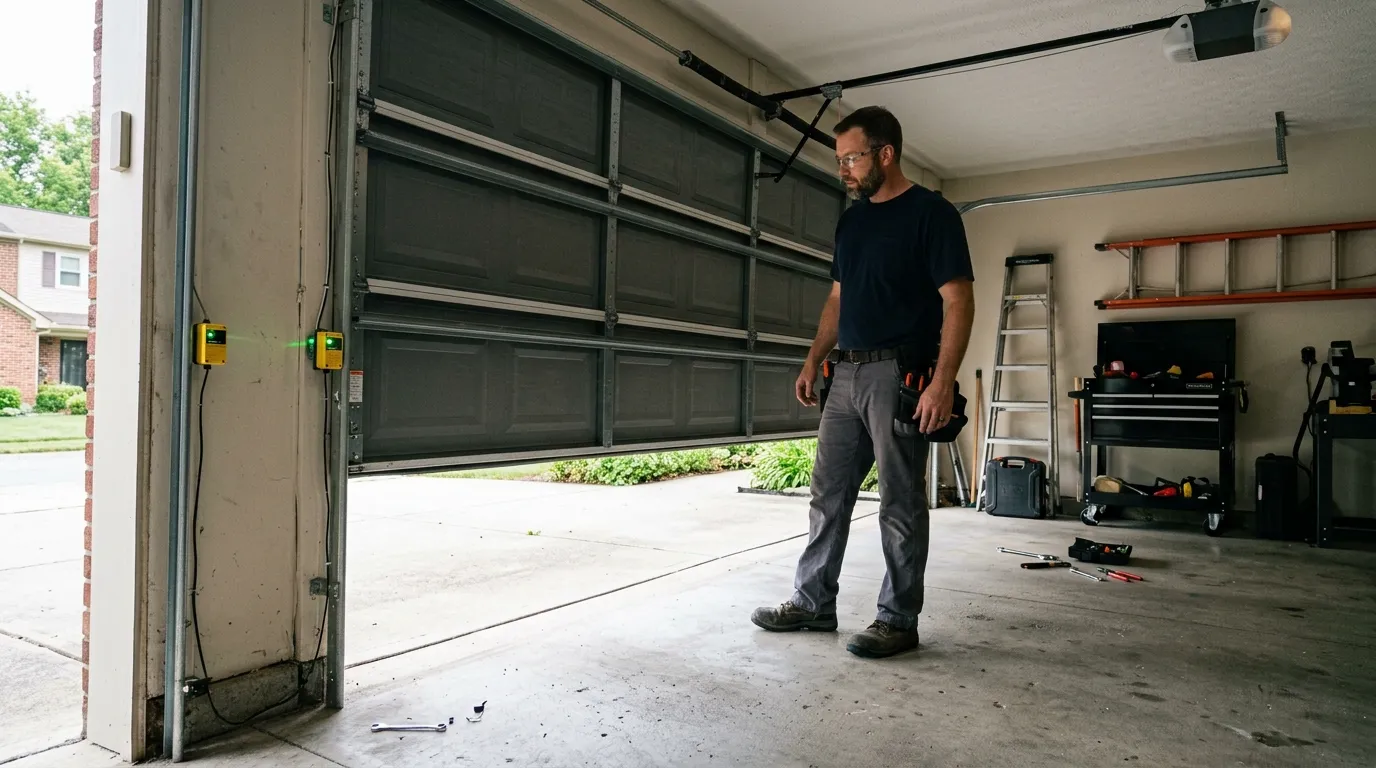
Once the truck is on-site, a standard two-cable replacement on a single door runs under an hour in most cases - the work itself isn't long. The variable is the drive, since we're coming from Orange, roughly 16 miles each way, and that's time built into scheduling rather than time spent standing at your door.
If the drums are original to a 1957-era door and worn or grooved from decades of cable wear, that adds time, because a grooved drum will chew through a new cable fast if it isn't resurfaced or replaced with it. We check the drums as part of the job rather than assuming they're fine just because the cable failed and not them.
Double doors take longer than single doors, mostly because there's more cable and more spring tension to manage safely, not because the mechanical work is fundamentally different. We don't rush the tensioning step regardless of door size - that's the part where a shortcut shows up later as a re-snapped cable.
What the Fix Involves
A proper cable repair replaces both cables on that door, even if only one broke. Cables age together under the same tension and cycle count, so a matched pair that's already at the same wear point is a bad bet to leave half-replaced. We also inspect the drums the cables wrap around, the bottom brackets where the cable anchors to the door, and the rollers and track on the side that was carrying the crooked load, since a door that's run at an angle for even a day or two can wear a roller unevenly.
On older houses in this area, we're also checking whether the drum and cable length match the door's actual lift type. A mismatch from a past repair - wrong cable gauge, wrong drum diameter - puts uneven load on the new cable from day one and shortens its life regardless of how well it's installed.
We release spring tension before touching anything on the cable side, then rewind and re-tension once the new cables are seated and the door is running level. We test the door through a full open-close cycle before we call the job done, checking that it sits flush and doesn't drift.
What You Pay
Median household income in Lakewood runs $116,794, noticeably above the $102,303 median across the wider service area, and that gap matters for how we frame a cable job versus a bigger repair. On a 1957-built house, if the cable failure is isolated - no cracked panel, no worn-out opener, springs still in decent shape - a cable-only repair is usually the right call and the cheaper path, and we're not going to upsell a full door replacement onto a job that doesn't need it.
Where the math flips is when the same visit turns up a grooved drum, a spring near the end of its cycle life, and worn rollers all at once on a door that's original to the house. At that point you're paying for parts three separate times instead of once, and a full torsion-and-hardware overhaul, or in some cases a new door, ends up cheaper over the next several years than serial repairs on an aging setup.
We don't have a fixed price list to quote you here, since that depends on drum condition and door size, but we'll tell you on-site which side of that line your door falls on before we start any work.
Talk to a Lakewood Technician First
Describe what the door is doing and get a straight answer on what it likely needs.
Other Garage Door Services in Lakewood
Recent Work in Lakewood
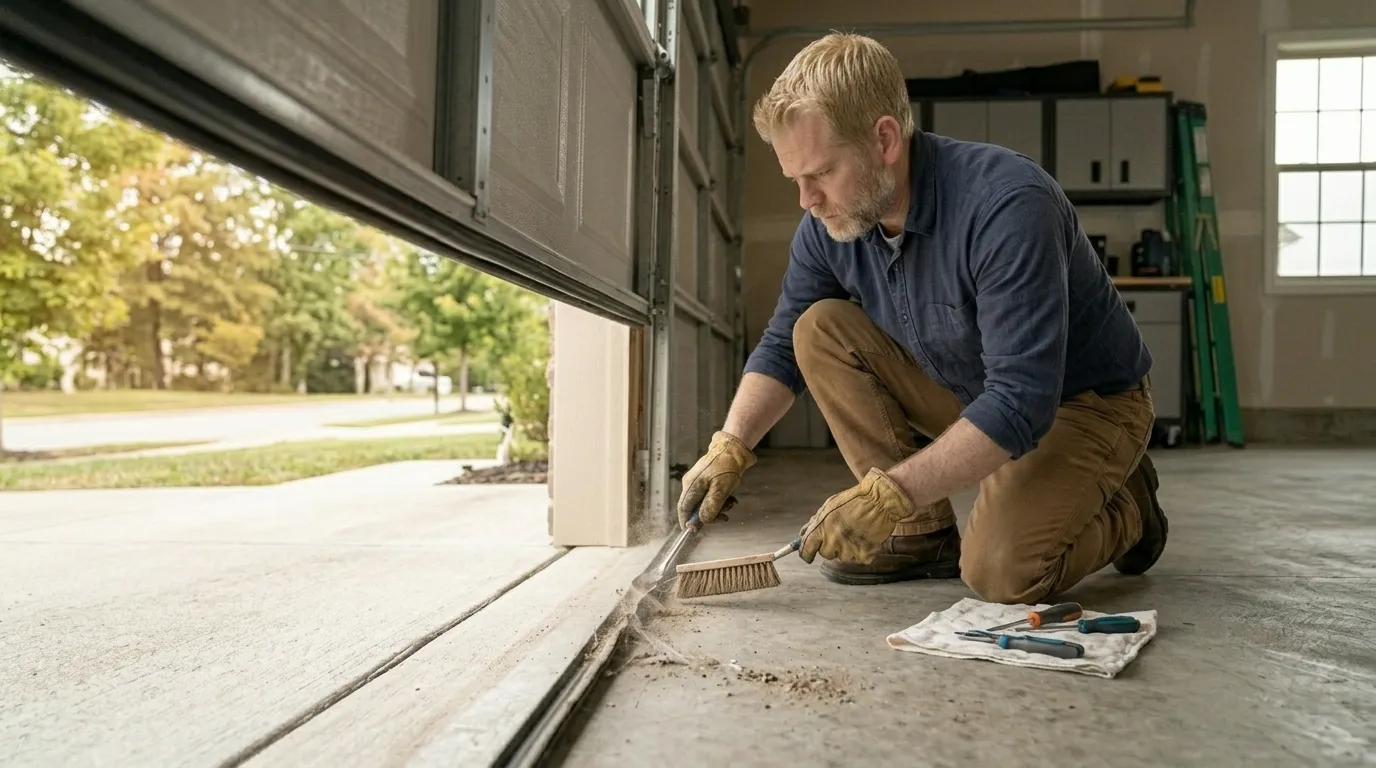
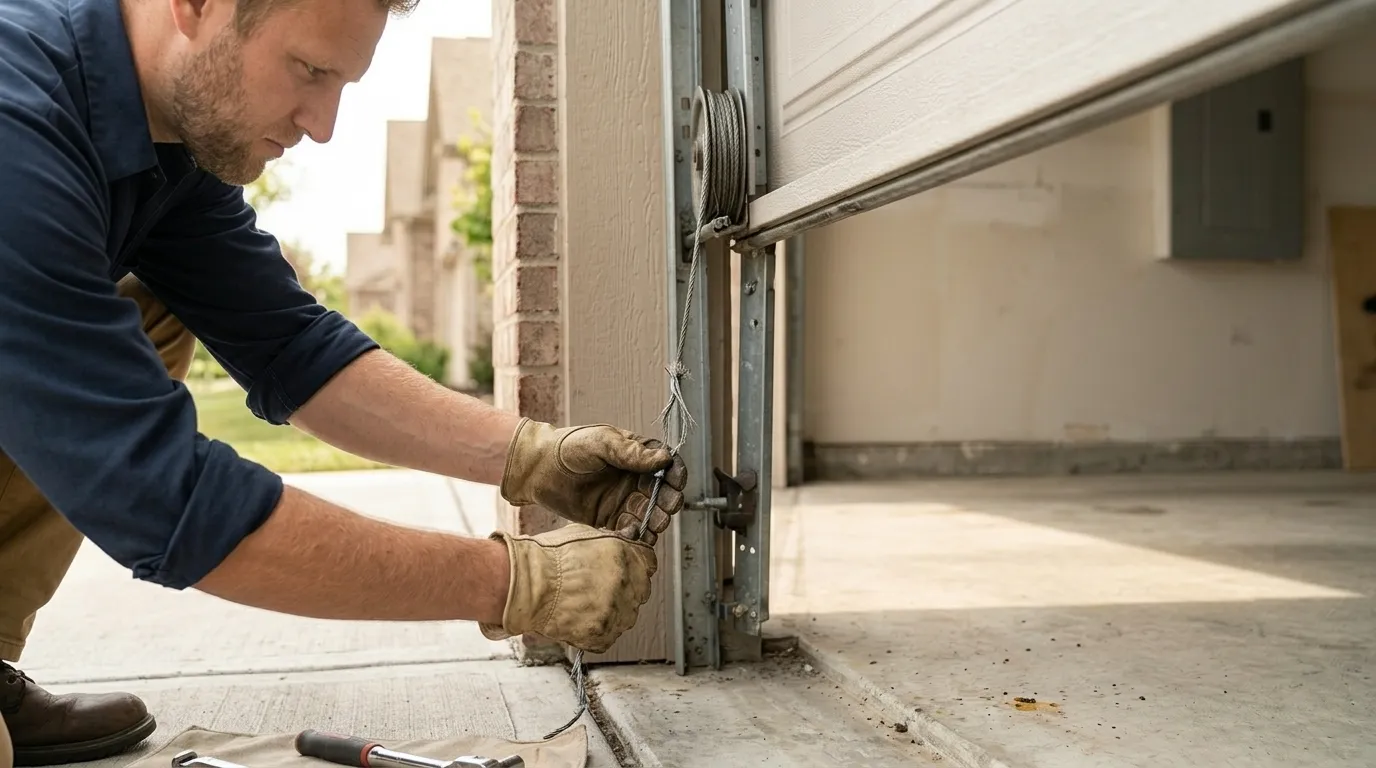
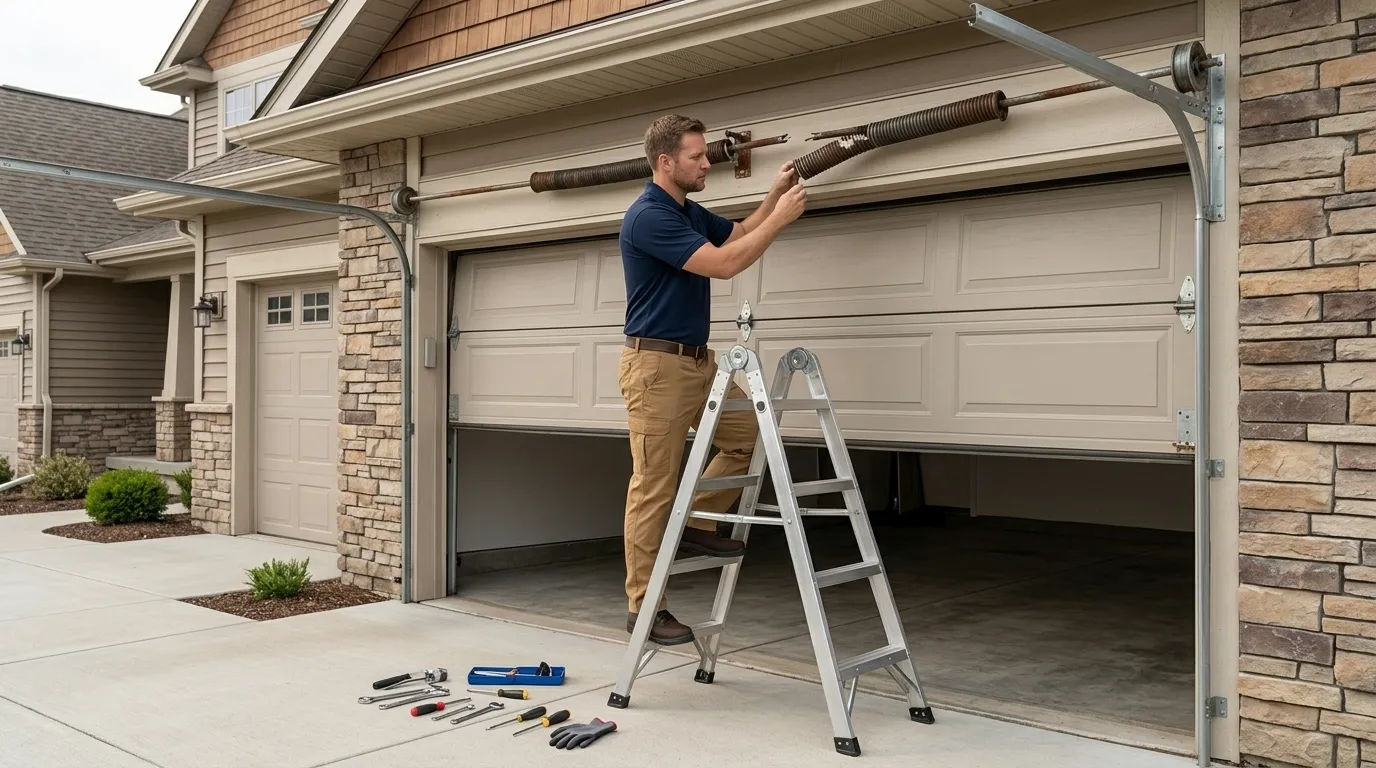
A look at jobs our crew has been on nearby.
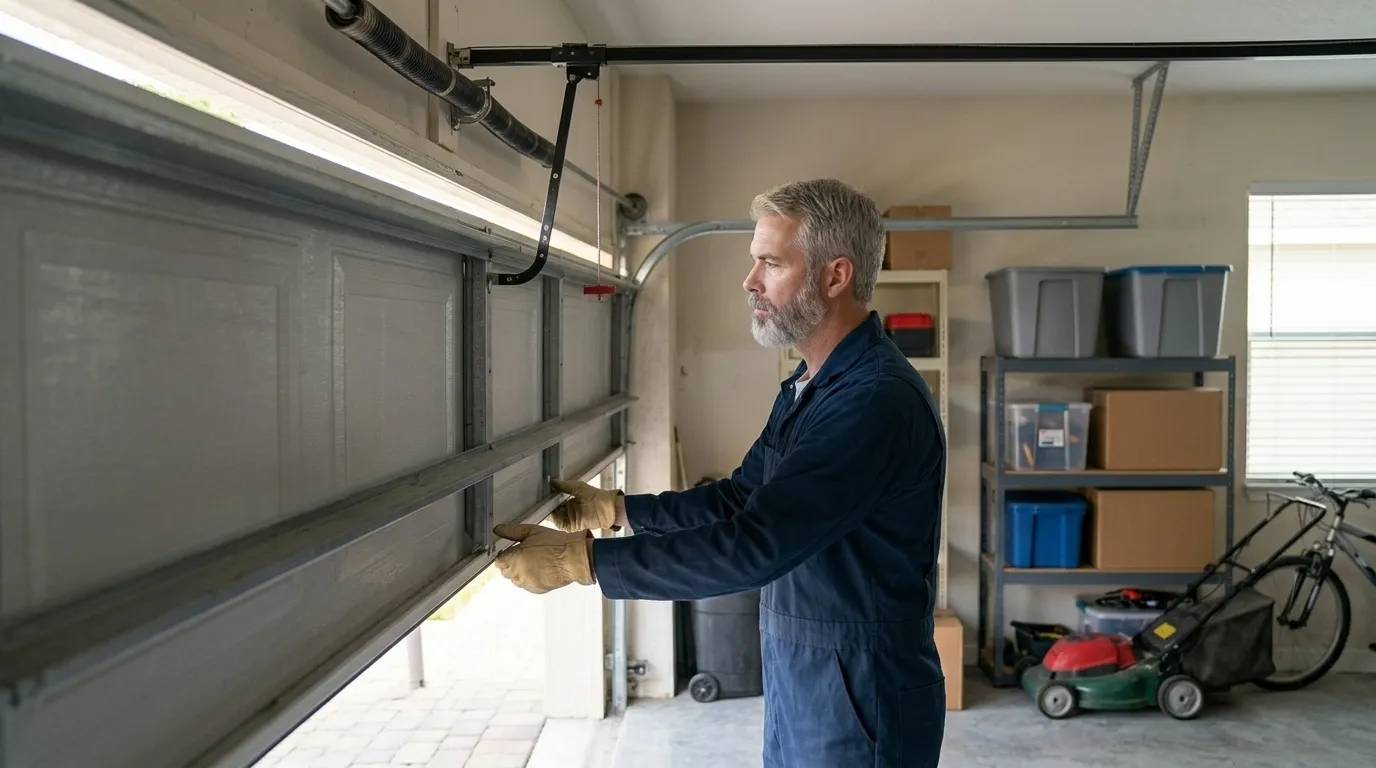
Why Lakewood Calls Us
Frequently Asked Questions
Why is one cable replacement turning into two?
Cables wear as a matched pair under the same tension and cycle count. Replacing only the broken one leaves a cable at the same age and wear level carrying full load, which usually fails again soon. We replace both sides on the same visit so the door stays balanced.
Is my garage door's hardware original if my house was built around 1957?
Not necessarily. Lakewood's housing centers on that era, but garage doors and their drums, cables, and springs get replaced over the decades, often more than once. We check the actual hardware on your door rather than assuming its age from the house.
Do you carry cable stock on the truck for a same-day fix?
We bring commonly needed cable lengths and drum sizes, but we confirm the exact spec for your door before the visit. Because we're driving out from Orange, roughly 16 miles, getting the right parts loaded before we leave matters more than it would for a closer job.
Could a snapped cable have damaged anything else?
Possibly. A door that ran crooked for even a short time before you noticed can wear a roller unevenly or strain the track on that side. We inspect both when we're there for the cable, since leaving a secondary problem in place shortens the life of the new cable too.
Need Cable Repair in Lakewood?
Call now for straight answers on cost and timing.