Service
Garage Door Repair for Orange, CA Homes
Local repair for Orange homes built mostly between 1938 and 1995 - worn springs, dragging tracks, and openers that struggle in the mild coastal-inland climate.
- Licensed & Insured
- Same-Area Service Calls
- Upfront Pricing
Why It Happens Here
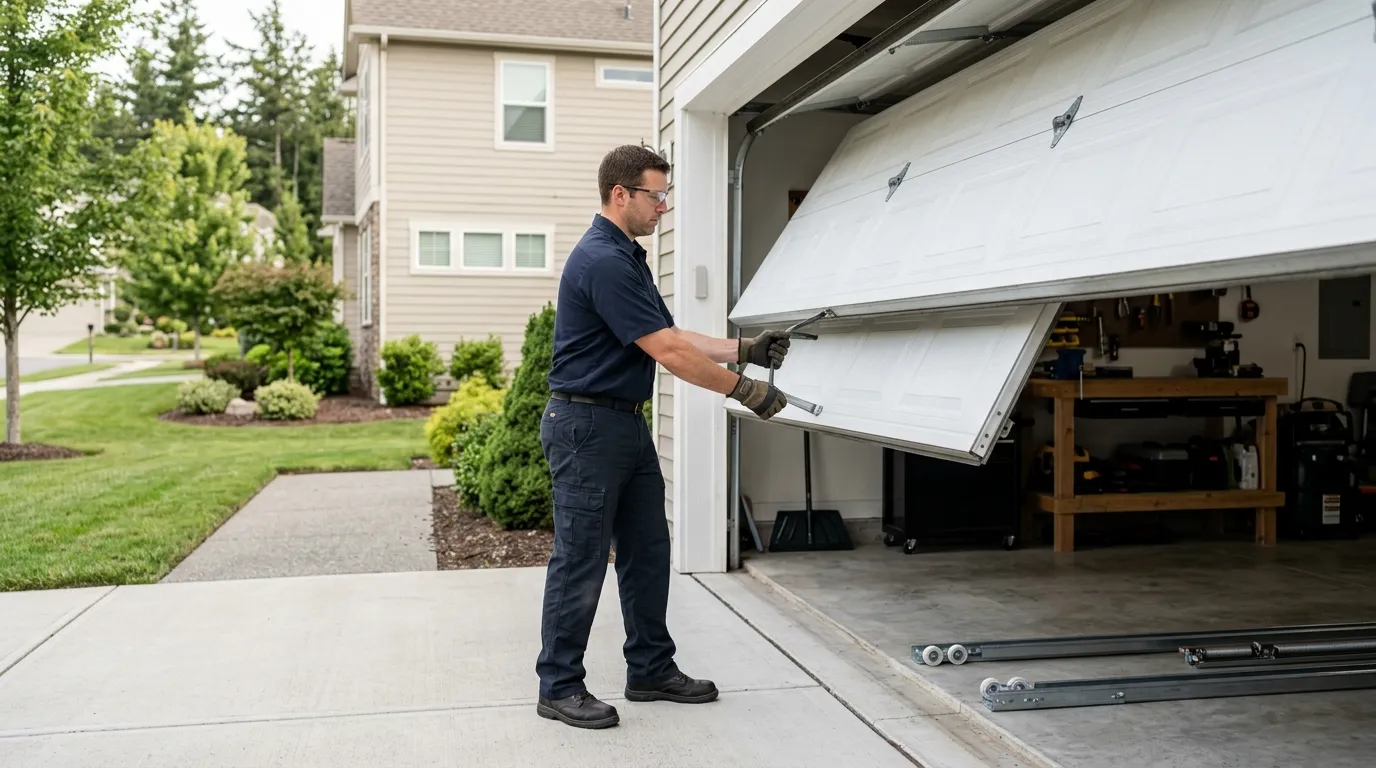
Most houses in Orange went up between 1938 and 1995, with the bulk of the stock dating to the 1960s and 70s across the 47 named neighborhoods that make up this city. That matters for garage doors because a house built in 1968 has had roughly five and a half decades of spring cycles, track settling, and hardware fatigue - long enough that even a well-maintained door is on its second or third torsion spring by now, and the original steel track has usually been re-shimmed at least once as the slab settled.
The mild temperate climate here doesn't put doors through the freeze-thaw cycles that crack panels or seize springs the way a harsher climate would. That's the good news.
The trade-off is that a lot of doors in this age range never got upgraded hardware because nothing ever failed catastrophically - they just wore down slowly, so homeowners are often surprised when a spring finally lets go or a roller finally seizes, because the door 'seemed fine' right up until it wasn't. We see this pattern constantly in the older tracts, from the streets near Placentia's border out toward Villa Park.
A door that's been quietly degrading for fifty years doesn't fail all at once - it fails in the specific order of spring, then cable, then roller, then opener gear. Knowing where a given house sits in that sequence is most of the diagnosis.
What the Fix Involves
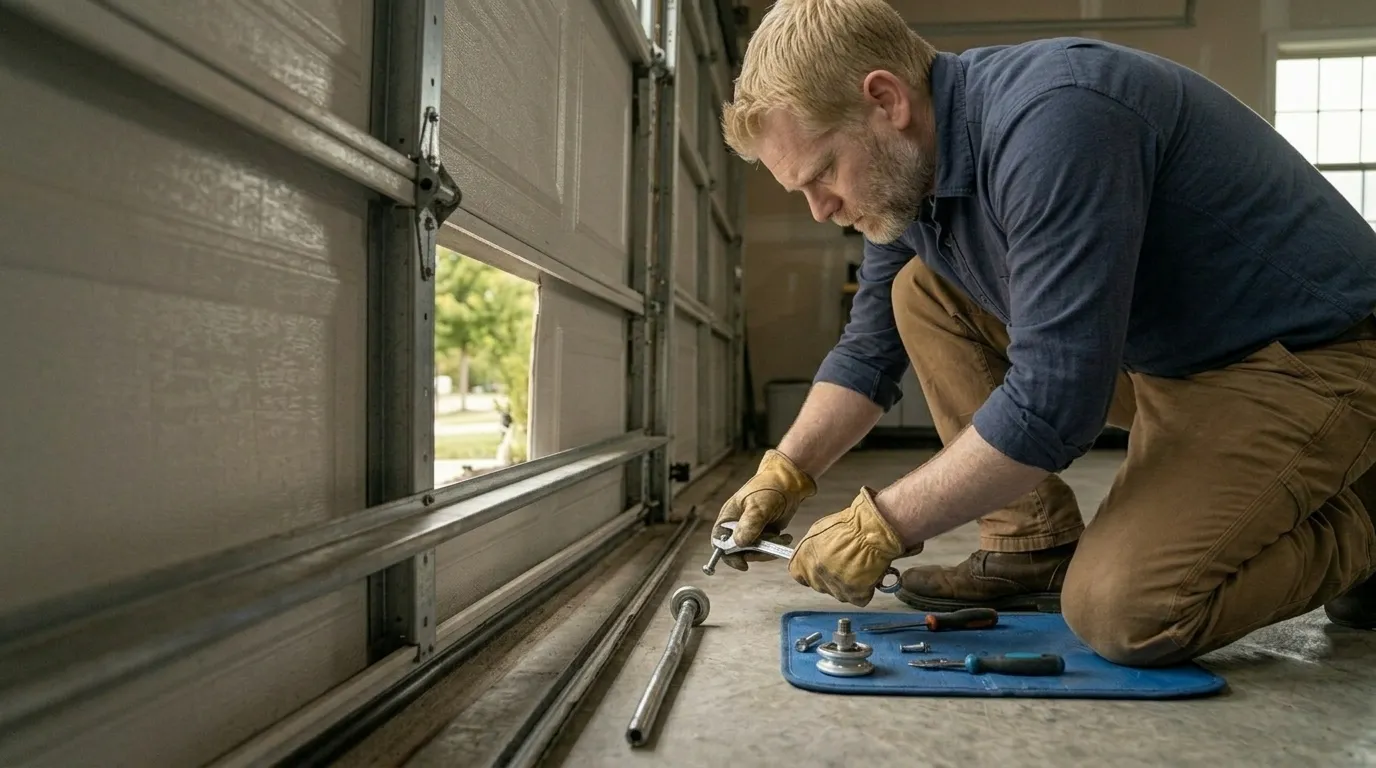
On a torsion spring job, we match the spring to the door's actual weight and cycle count rather than swapping in whatever's on the truck - a lot of 1960s and 70s doors in Orange were built heavier than what's sold new today, so an off-the-shelf spring undersizes the door and shortens its life again within a couple of years. We check both springs even when only one has broken, since they're wound to the same cycle count and the second is usually close behind.
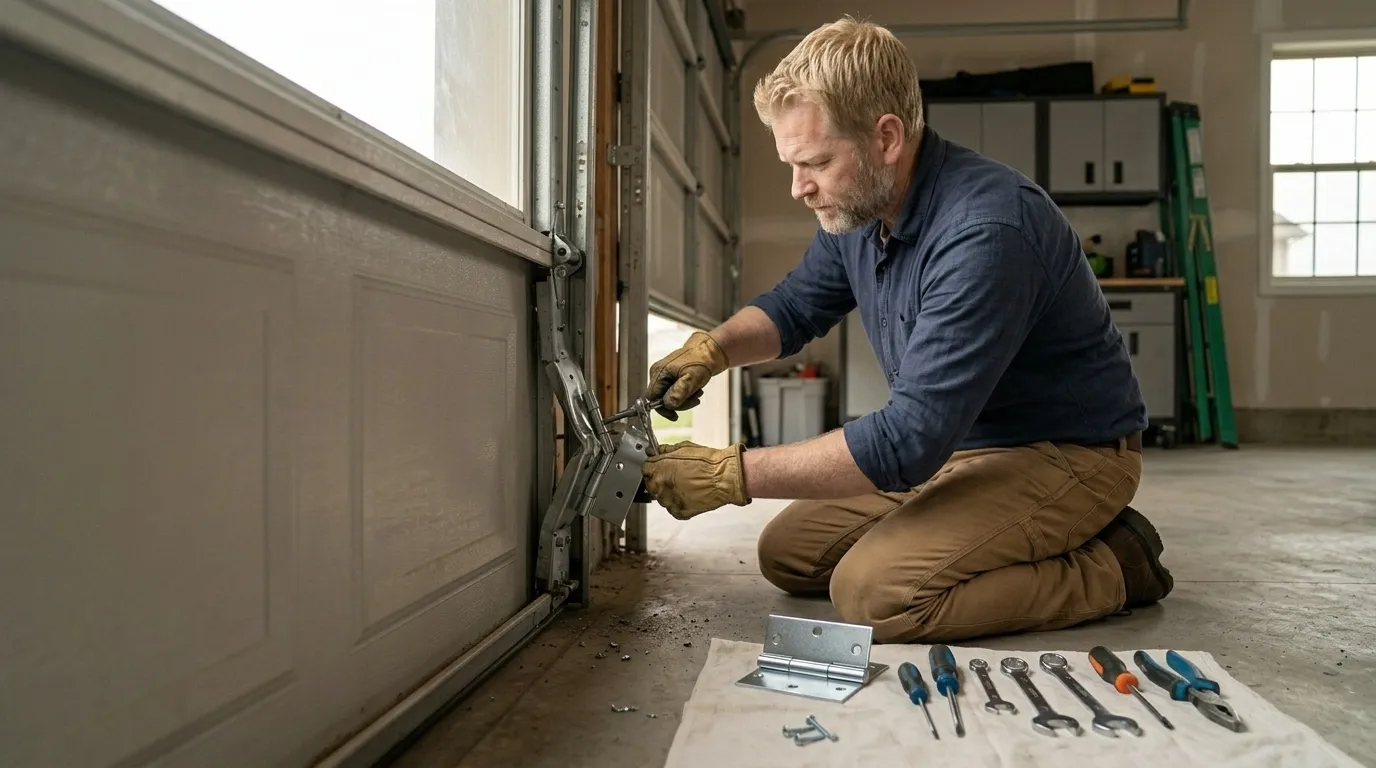
For tracks, the fix is rarely a full replacement. On the older stock here, the track itself is usually fine - it's the mounting brackets that have worked loose from decades of slab settling, and re-anchoring them solves the binding without tearing into the wall. We only replace track when it's visibly bent or rusted through, and we won't sell a full replacement job to someone who just needs brackets tightened.
Openers get evaluated on the gear and capacitor before anything else, since a struggling opener is often just compensating for a spring or track problem rather than being the actual point of failure. Fixing the door first, then testing the opener under proper balance, avoids replacing a motor that was never the real issue.
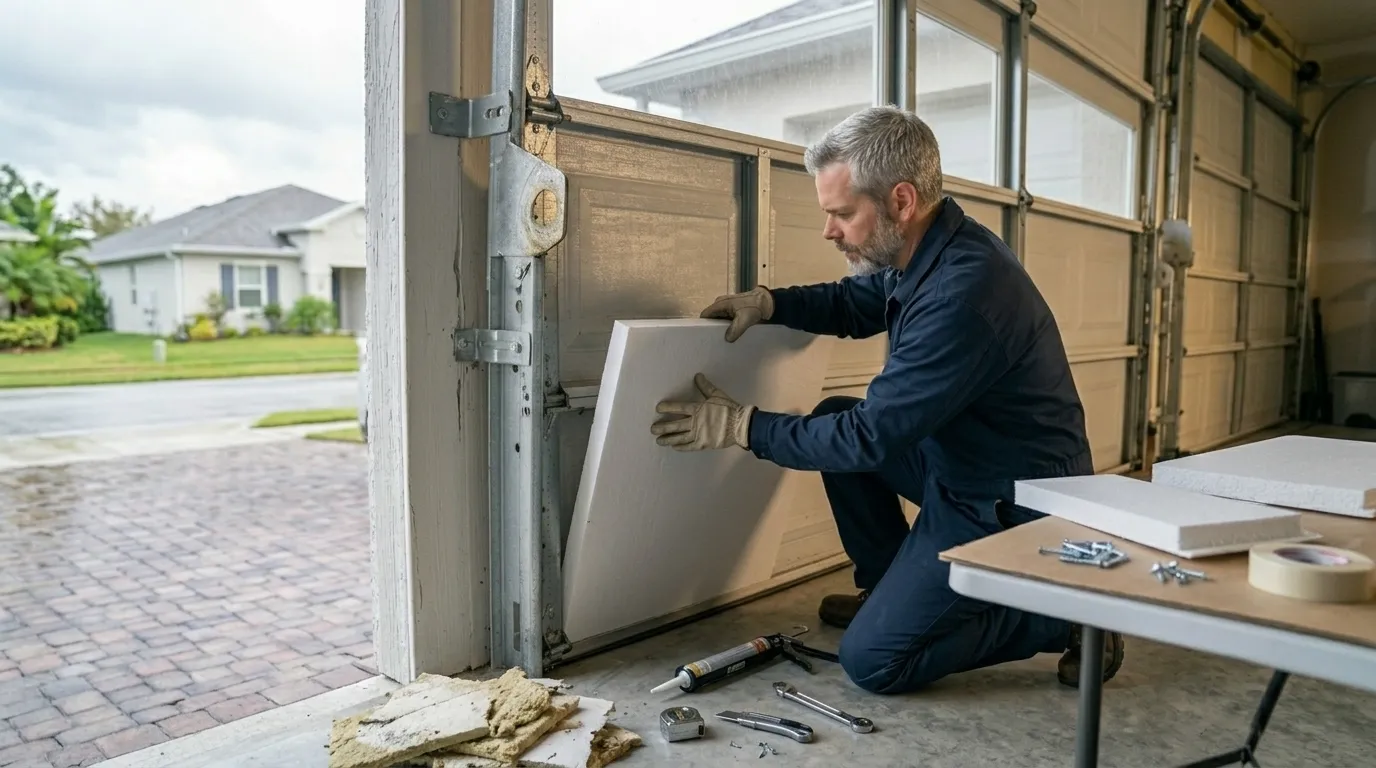
One limitation worth naming here: if a panel is original steel from the 1968-era construction and it's dented or rusted through, we generally can't source a matching panel - full section or door replacement is the honest answer, not a patch.
The Symptom
The most common call we get from Orange is a door that won't fully close, or one that reverses partway up on its own. On houses from the 1960s-70s wave that makes up most of this city's stock, that's almost always a spring that's lost tension - the opener senses the extra resistance and stops the door to protect the motor, which reads to homeowners like an opener problem even though the opener is doing exactly what it's supposed to do.
A close second is a door that's noticeably heavier to lift by hand than it used to be, paired with a grinding or popping sound near the top of the track. That's usually a roller that's worn oval instead of round, which happens gradually enough on an older door that owners often don't notice until the sound gets loud enough to be alarming.
Less common, but not rare in this age bracket, is a cable that's frayed or has jumped its drum - visible as one side of the door hanging lower than the other. That one shouldn't wait; a door running on one working cable can come down unevenly and damage the track or the opener trying to compensate.
How to Book
If your door in Orange is sticking, sagging on one side, or reversing when it should close, call and describe what you're seeing - the sound, which side looks low, whether it's the opener or the door itself that seems to be struggling. That helps us bring the right spring size and hardware on the first visit instead of a second trip.
We cover Orange and the surrounding area out to about 15 miles, including neighborhoods like Villa Park and North Tustin close in, and farther out toward Cerritos and Diamond Bar. Visit our home page for the full list of services if repair isn't the only thing you need.
Why Orange Calls Us
What Happens When You Call
Call or Request a Quote
Tell us what the door is doing and roughly how old the house is - that alone points us toward the likely part before a truck leaves.
On-Site Diagnosis
A tech checks the spring, cables, tracks, and opener in person and tells you plainly what is actually wrong.
Straight Price, No Surprises
You get a number before any work starts. It covers parts and labor, nothing added after the fact.
Fixed the Same Visit
Most repairs are done in one trip. If a part needs sourcing, we tell you that upfront instead of guessing.
Talk to a Technician Before You Book
Describe what the door is doing and get a straight answer on what it likely needs.
Jobs Like Yours
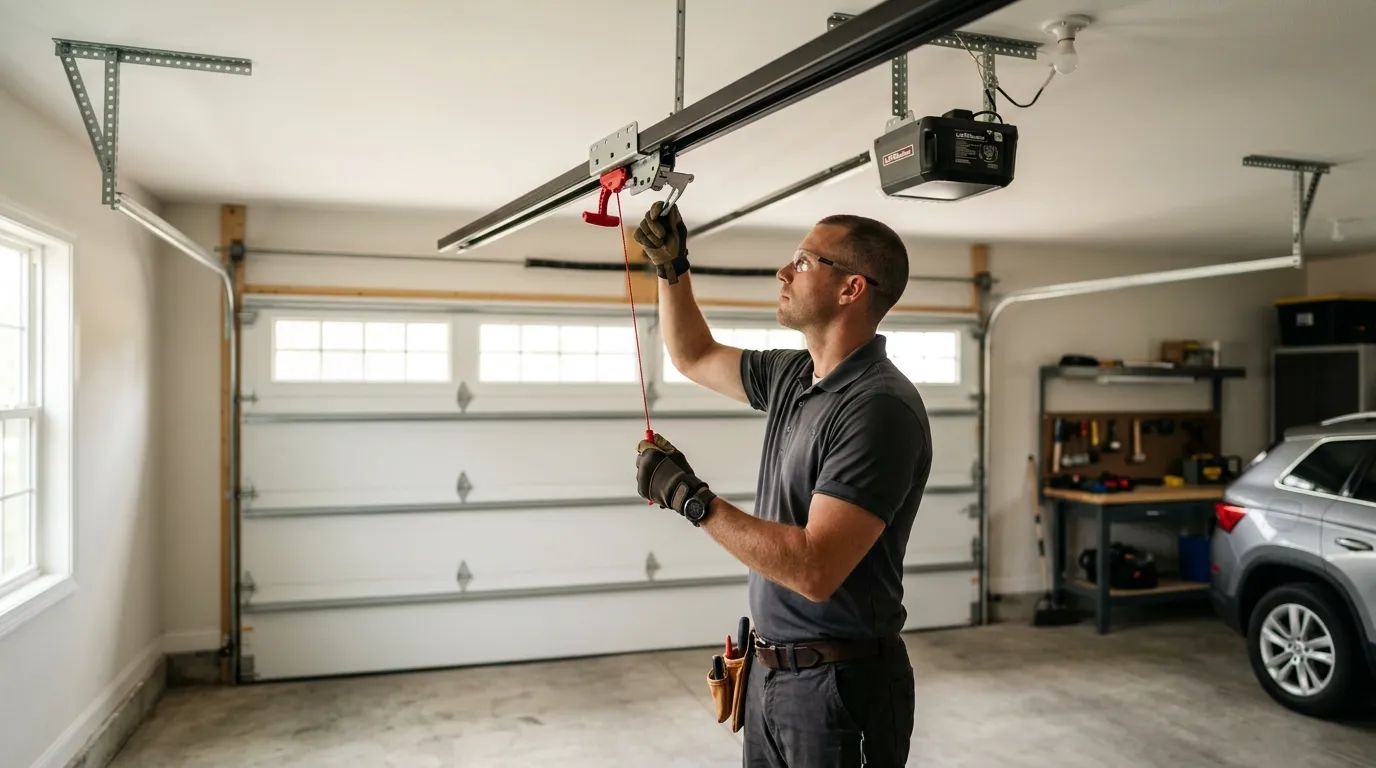
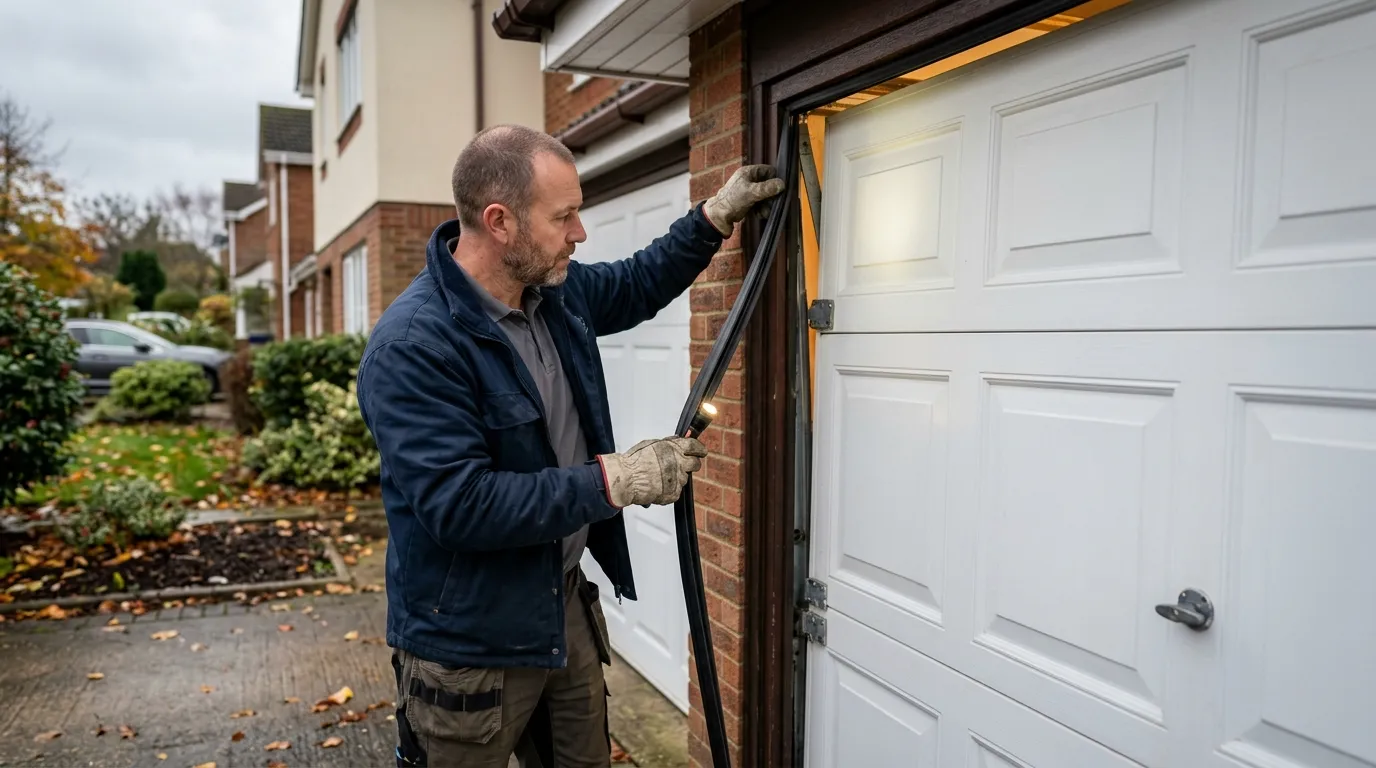
Recent work from this service line.
Other Ways We Can Help
Frequently Asked Questions
Why did my garage door spring break with no warning?
Torsion springs are rated for a set number of open-close cycles, and on a house from Orange's common 1960s-70s stock, that count runs out gradually with no visible warning sign. The door usually works fine right up until the spring reaches its cycle limit and lets go, which is why it feels sudden even though the wear was decades in the making.
Does Orange's climate cause garage door problems?
Not in the way cold-climate cities see it - there's no freeze-thaw cracking springs or seizing tracks here. The mild temperate climate mostly just means doors here fail from cycle-count wear and slab settling rather than weather damage, so the symptoms tend to be gradual instead of sudden.
Can you match the panel on my original 1960s door?
Usually not. Original steel panels from that era aren't stocked anymore, so a dented or rusted panel on a door that age typically means replacing the section or the whole door rather than a patch repair. We'll tell you honestly when that's the case instead of hunting for a part that doesn't exist.
Do you serve areas outside Orange itself?
Yes, we cover the surrounding area out to roughly 15 miles, including Villa Park, North Tustin, Placentia, and communities farther out like Cerritos and Diamond Bar.
Need Garage Door Repair for Orange, CA Homes?
Call now for straight answers on cost and timing.