Orange Garage Door Guide
Why a Cold Morning Can Still Snap a Spring in Orange
Orange homes built mostly between the 1960s and 1990s carry original or aging torsion springs. Here's why a cold snap in a mild climate still snaps them, and what to do.
- Licensed & Insured
- Same-Area Service Calls
- Upfront Pricing
When to Get Help
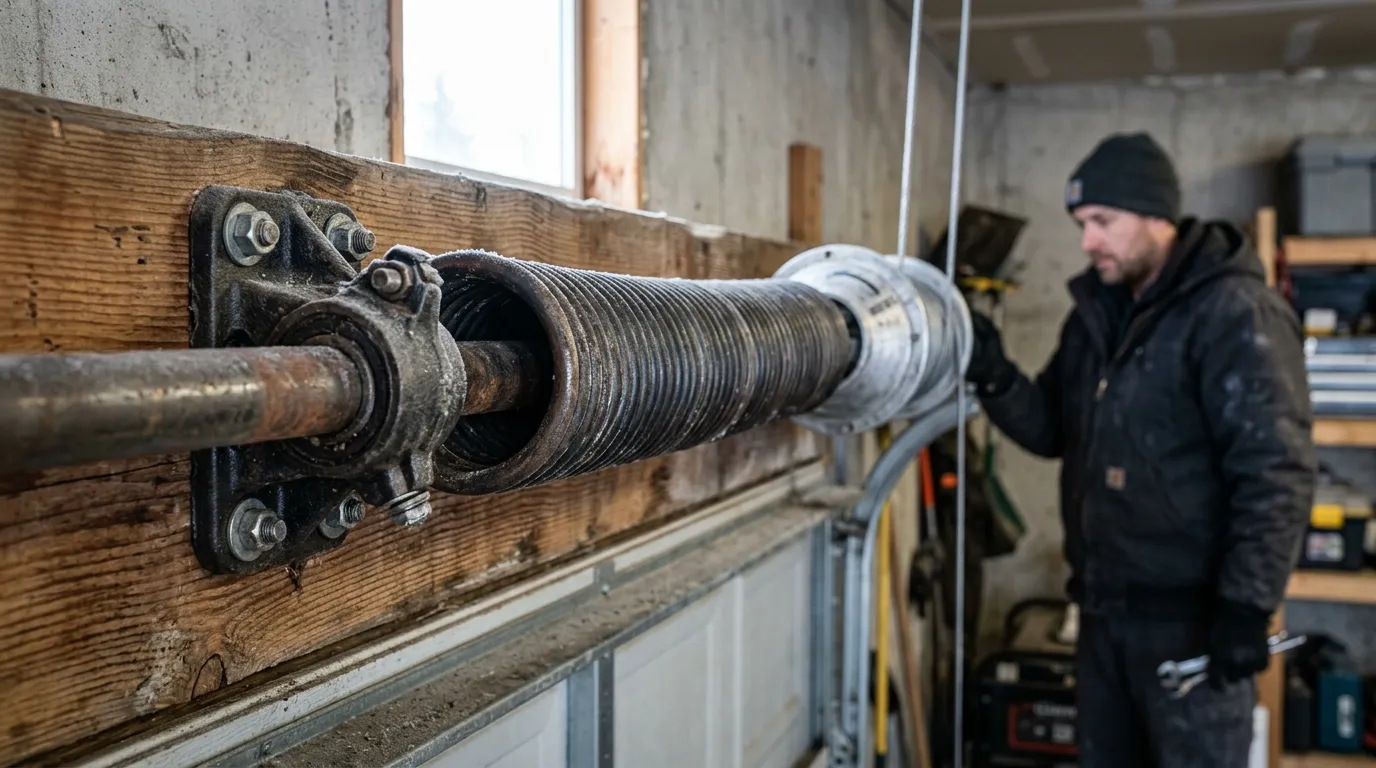
If the door won't budge, sags on one side, or you hear a bang from the garage before sunrise on a cold morning, that's a spring, not the opener. Don't yank the emergency release and try to force it by hand - a torsion spring under tension can whip the bar it's wound on and take a finger with it. Call before you touch the cables.
Orange sits in a mild temperate band, so we don't get hard freezes, but overnight lows still swing enough to stiffen old steel and shrink lubricant film on a spring that's been doing the same job since a house built in the 1960s or 70s got its garage. That's the window where a spring that was already fatigued finally lets go - not because of a storm, but because the metal had nothing left to give.
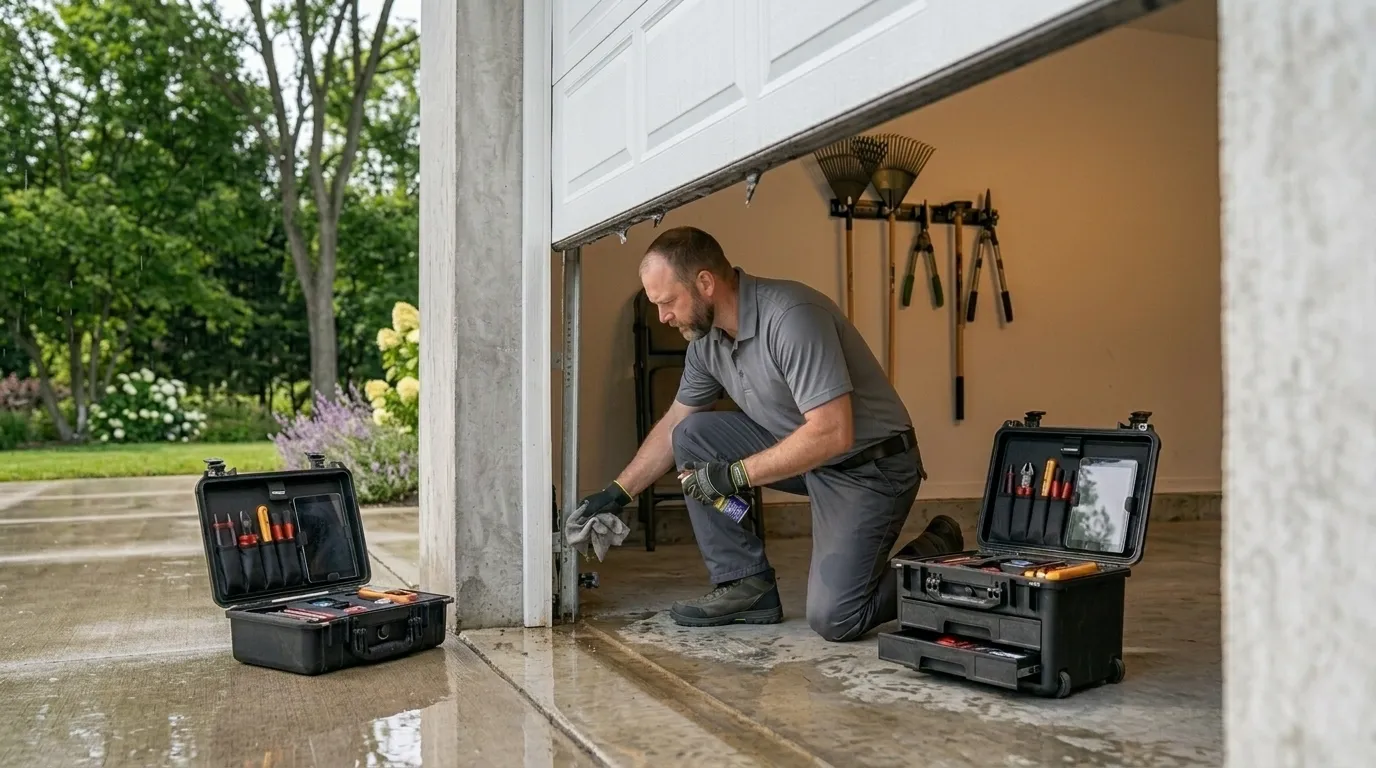
If the door is still moving but sounds rough, or drops faster than it used to on the way down, that's the spring losing tension before it breaks outright. That's worth a call the same week, not after it snaps at 6 a.m. with the car trapped inside.
What Most People Get Wrong
The common mistake here is blaming the opener. A dead motor and a broken spring look almost the same from the driveway - the door won't lift - but an opener has to fight the full weight of the door once the spring stops carrying its share, and that's usually what burns it out next. Replace the opener first and the door still won't open right, because the spring was the actual problem.
The second mistake is thinking cold weather causes the break outright. It doesn't, not on its own - Orange doesn't get the kind of freeze that cracks metal by temperature alone. What cold weather does is expose a spring that was already near the end of its life, on a door that in a lot of this area's housing stock has never had the spring swapped since the house was built.
The cold is the trigger. The fifty-plus years of wind cycles are the cause.
A third thing people miss: a single spring on a double door doesn't mean the other one is fine. If one went from age and use, the other has the same wear on it and often goes within a season.
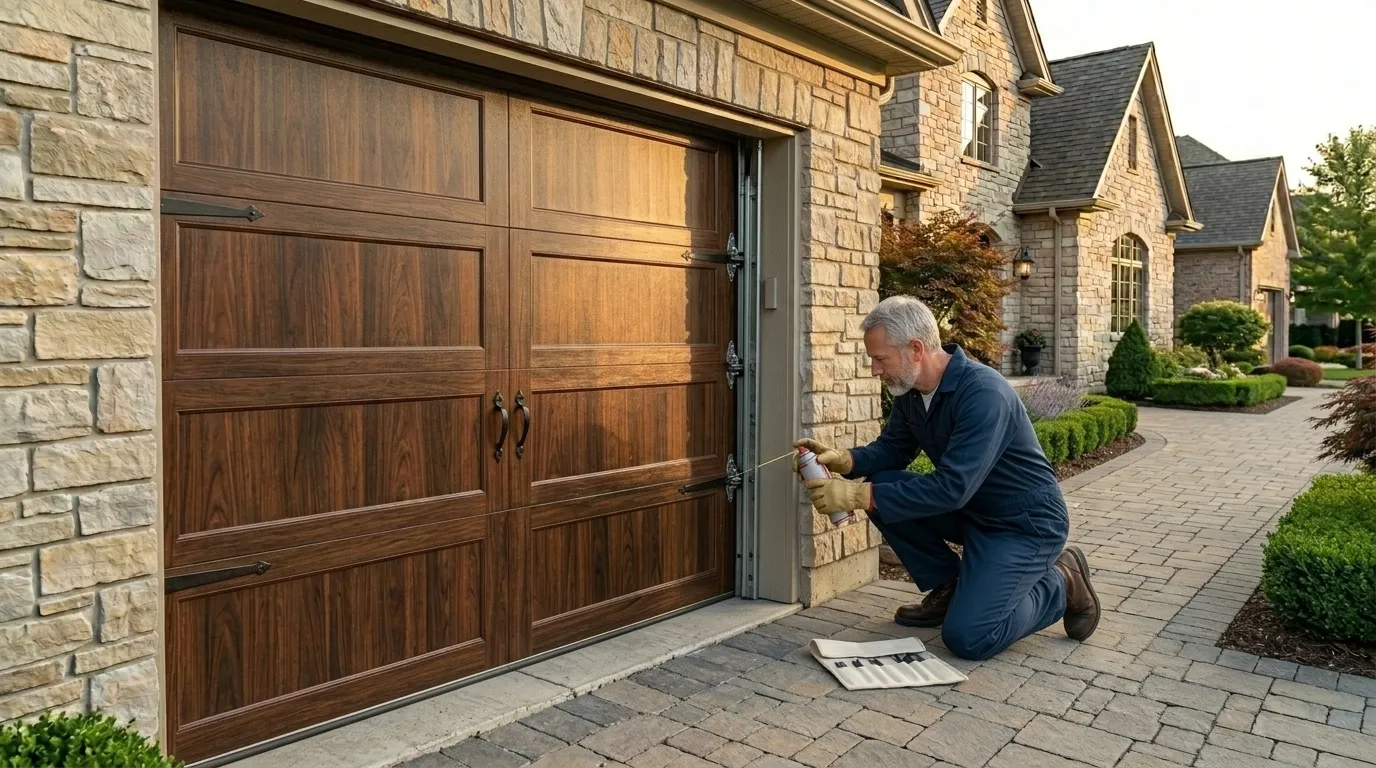
What Is Going On
A torsion spring is rated for a number of open-close cycles, not for a number of years, but years are what tell you how many cycles it's actually seen. In a market where housing runs from 1938 through 1995 with a median build year of 1968, and most of the stock across this area dates to the 1960s and 70s, a lot of springs still in service are either original or a first replacement that's now also decades old.
Steel doesn't fail cleanly. It work-hardens and loses a bit of tension with every cycle, and that process speeds up with any change in temperature that shrinks or expands the coil, even a mild one. In a temperate coastal-influenced climate like this one, that's usually a 15-20 degree overnight swing rather than a freeze - enough to matter on a spring that's already thin from age, not enough to matter on a new one.
So the break you see on a cold morning isn't cold-weather damage in the way a burst pipe is. It's the last cycle of a spring that's been shedding strength for years, and the cold snap just happened to be the morning it ran out.
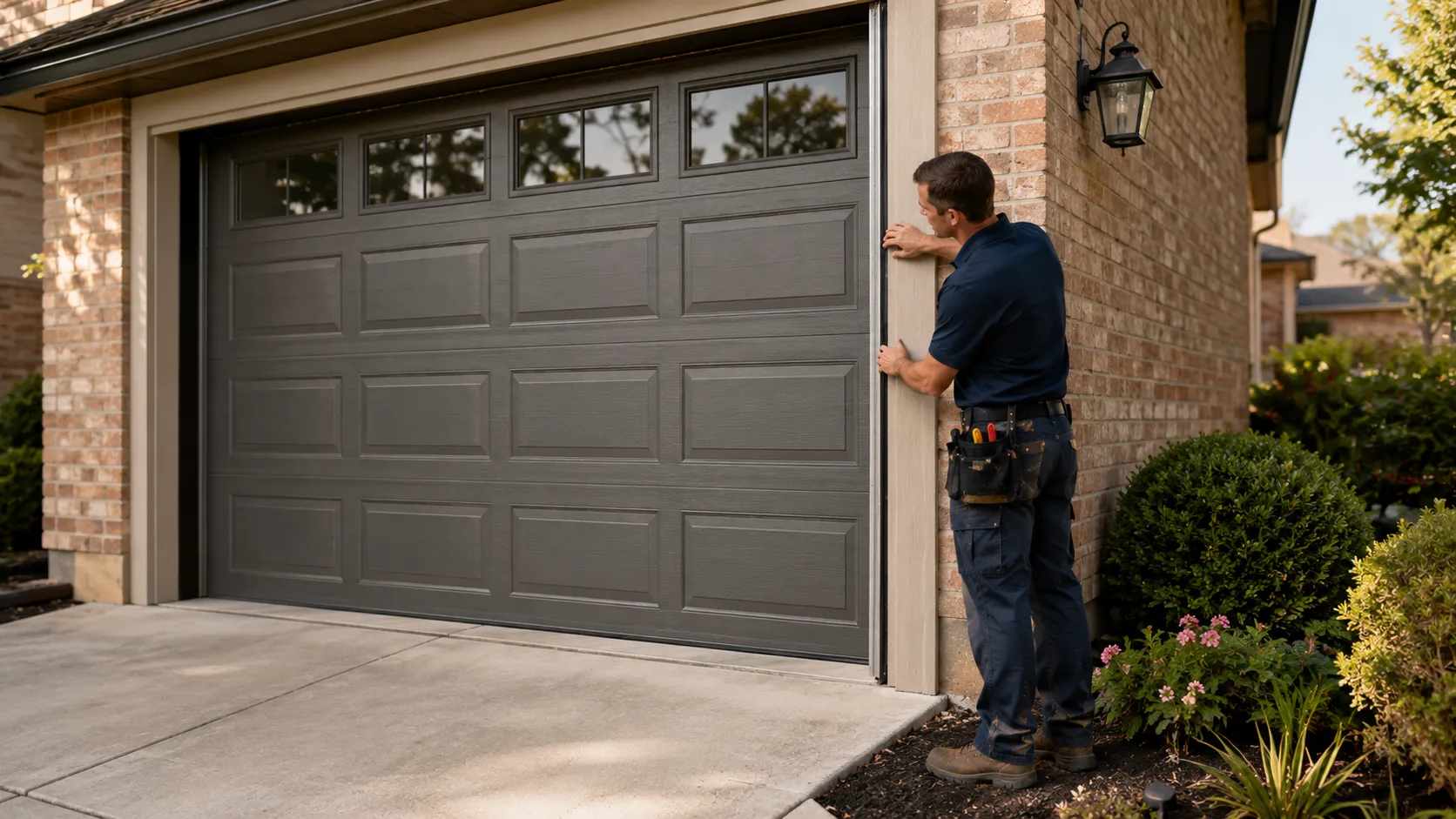
What Local Conditions Do
Because this area doesn't see hard freezes, garage door springs here rarely fail from ice or from metal actually cracking with cold - that's a different climate's problem. What our mild swings do is make wear gradual and easy to ignore. A spring in a harsher climate might announce itself with a loud complaint each winter; here it just quietly loses tension year over year with no obvious warning sign until the day it's gone.
That matters most for the pre-1980 houses that make up a large share of the area's stock. Those doors were often built with the spring sizing and hardware standard of their decade, and if no one's swapped the spring since, it's carrying fifty-plus years of cycles with none of the newer galvanized coating that resists the kind of coil fatigue we're describing.
One honest limit: we can't tell you over the phone whether your specific spring is original or a later replacement without seeing the winding cone and the coil gauge in person. Age of the house is a strong hint, not a guarantee.
How We Can Help
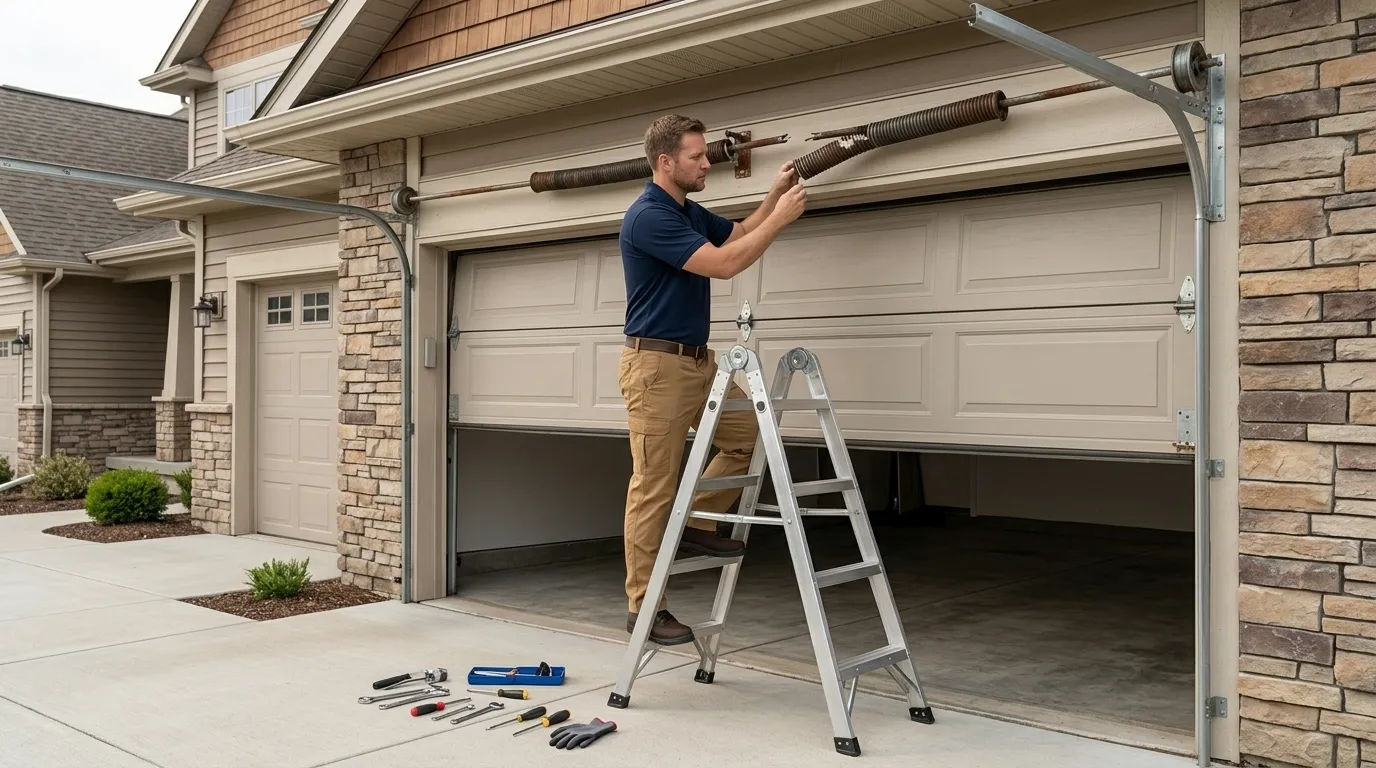
Garage Door Repair
Springs, cables, tracks, rollers, and openers fixed by a tech who explains the problem before touching anything.
Learn more →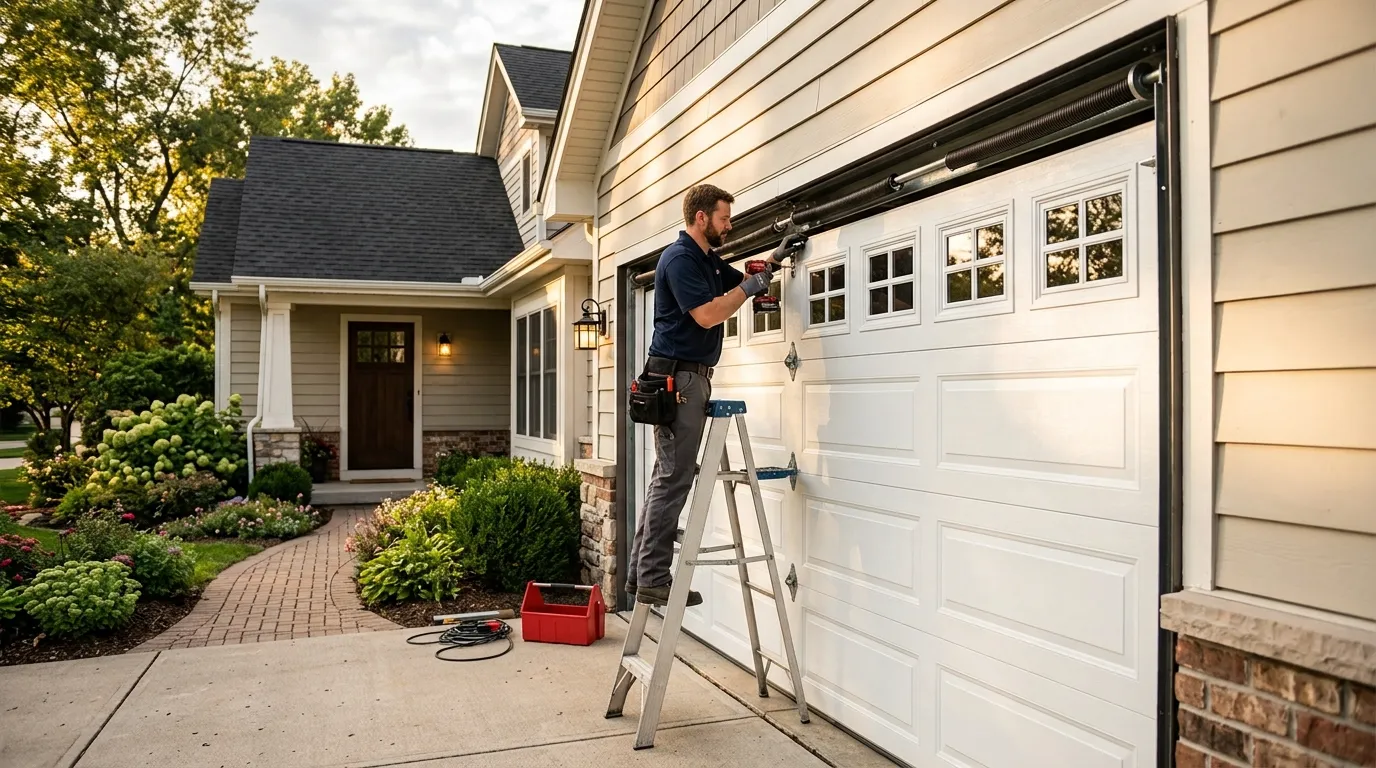
Garage Door Installation
New sectional doors sized and installed for the housing stock actually built in this area.
Learn more →
Garage Door Service
Tune-ups, lubrication, and safety checks that catch a small problem before it becomes a service call.
Learn more →Frequently Asked Questions
Does cold weather actually break garage door springs in Orange?
Not by itself. Orange sits in a mild temperate band, so we don't get the hard freezes that crack metal outright. What happens is a spring that's already fatigued from decades of cycles loses its last bit of tension on a cooler morning. The cold is the trigger, not the root cause.
My house was built in the 1960s - is the spring original?
It's possible. A lot of the housing stock in this area dates from the 1960s and 70s, and if no one's mentioned replacing the spring, there's a real chance it's the original one, now well past a normal service life. We'd need to look at the coil and winding cone to say for sure.
Is it safe to replace a torsion spring myself?
No. A wound torsion spring holds enough force to injure you if it slips off the winding bar or the cone breaks loose. This is one of the few garage door jobs we'd flag as not a DIY project regardless of how comfortable you are with tools.
If one spring broke, should I replace both?
On a double door, yes, usually. Both springs carry the same weight and see the same number of cycles, so if one has failed from age, the other is typically close behind. Replacing just one often means a second call within a year.
Have a Door That Needs a Second Opinion?
Call and describe what it is doing - we will tell you what it likely is.