
Orange Garage Door Guide
Why Doors Go Off Track in Orange's Older Housing Stock
Most Orange houses date to the 1960s and 70s, and original track hardware from that era is the top reason doors jump the rail. Here's what causes it here.
- Licensed & Insured
- Same-Area Service Calls
- Upfront Pricing
When to Get Help
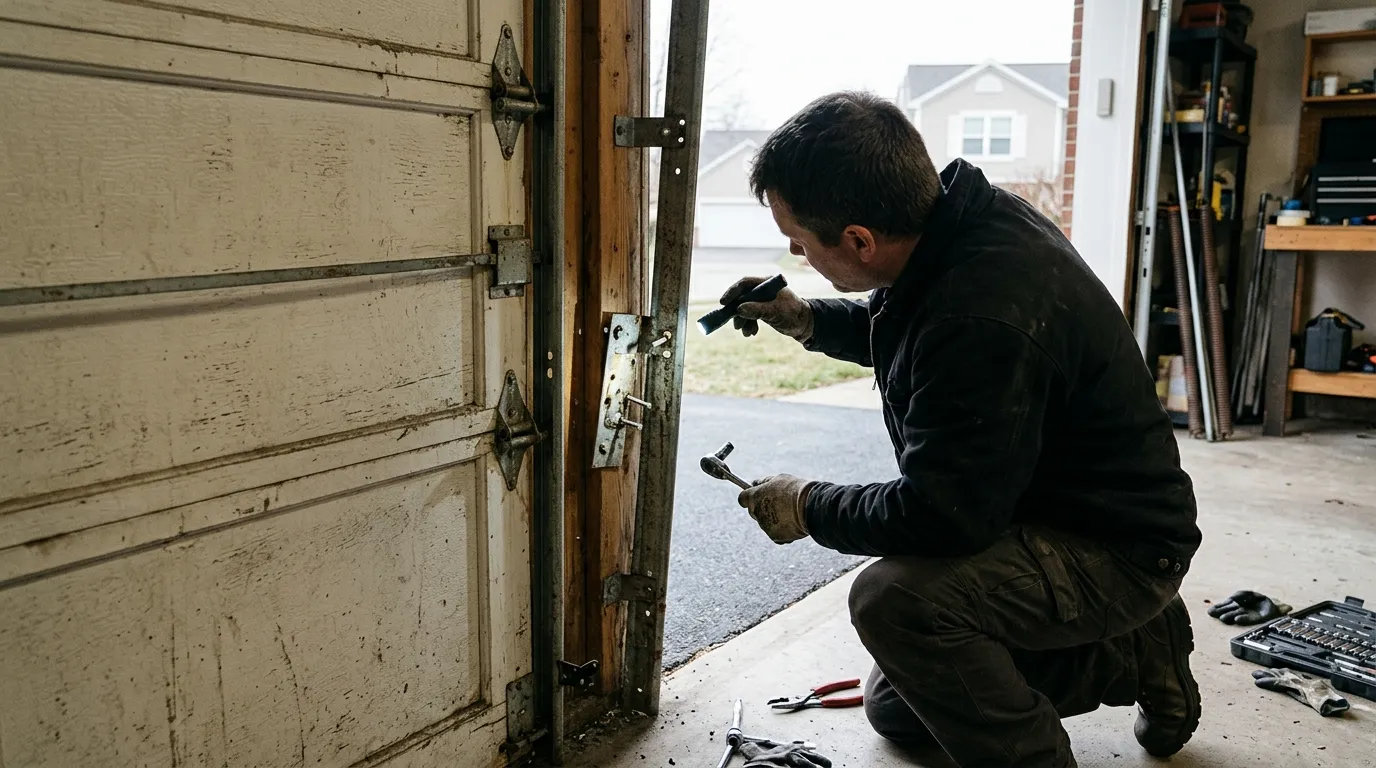
If the door is visibly cocked to one side, if a roller has popped out of the track, or if you hear a bang followed by the door refusing to move, stop using the opener and call. Running the opener against a door that's already off the rail bends the track further and can pull the bracket clean out of the framing, which turns a repair into a replacement.
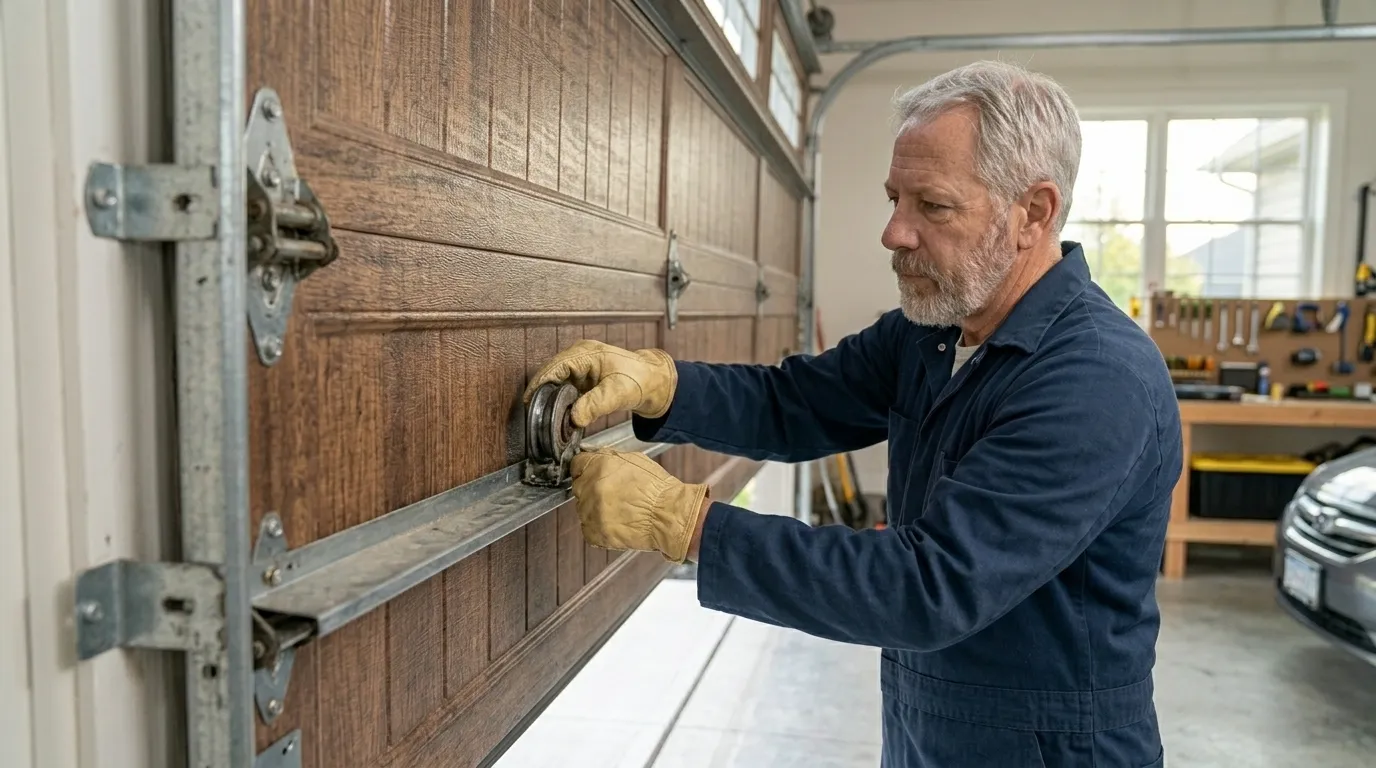
A door that's slow, noisy, or hesitates partway up isn't the same emergency. That's usually a roller or hinge wearing out, not a full derailment, and it can wait for a scheduled visit.
The distinction matters because in a lot of the houses we work on around here, built between 1938 and 1995 with a median year of 1968, the track brackets are original and the lag screws holding them to the jamb have been working loose for decades. Catching it before full derailment is cheaper by a wide margin.
What Most People Get Wrong
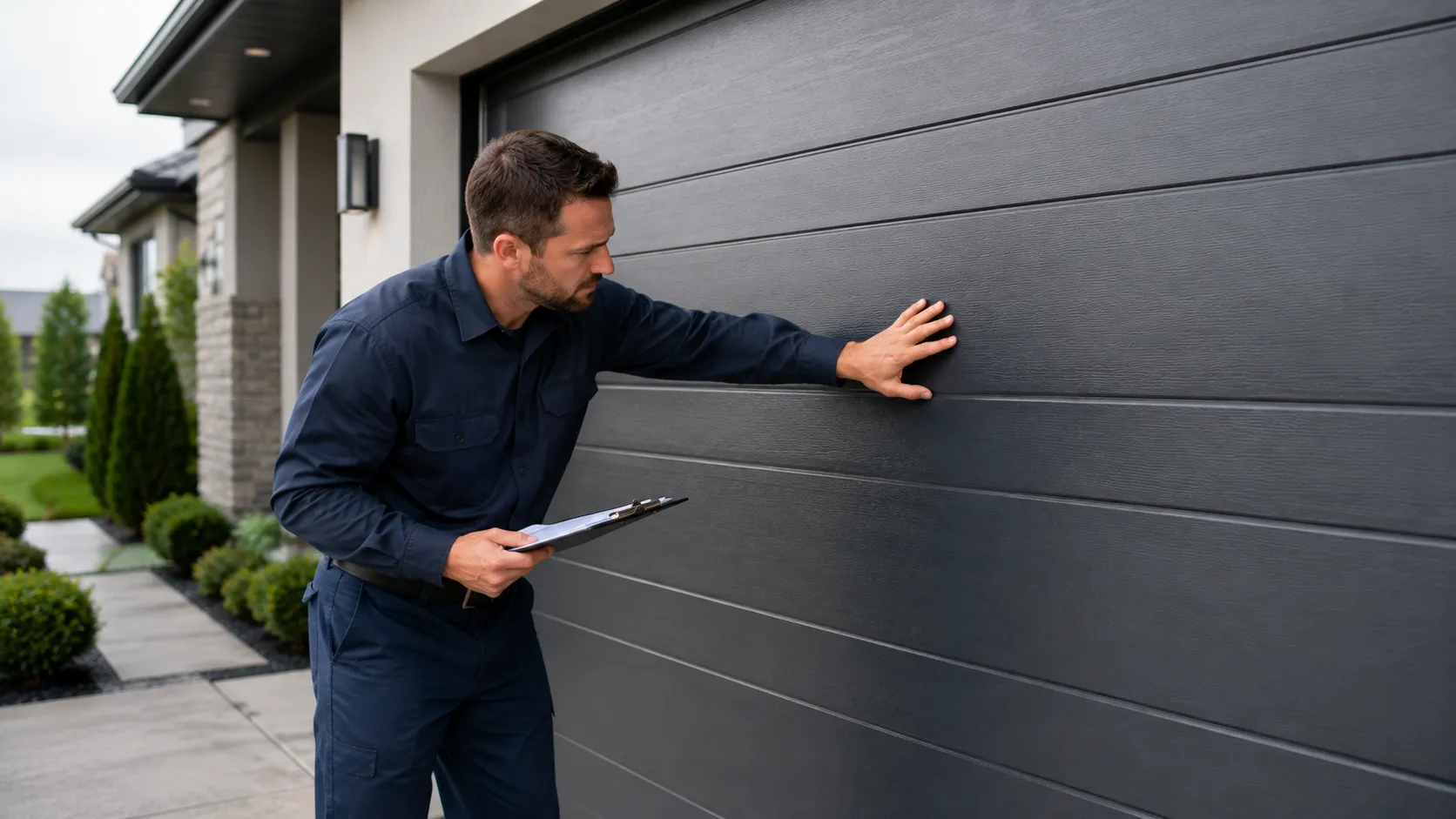
The common assumption is that a door jumps the track because of a storm, a big temperature swing, or a one-time impact. Around Orange that's rarely the real cause.
This area sits in a mild temperate band, so the door isn't fighting freeze-thaw cycling or the kind of humidity swings that warp wood panels elsewhere. There's no seasonal shock event doing the damage.
What's actually happening is slower and less dramatic: decades of use on hardware that was never meant to last this long. A lot of local stock is 1960s-70s construction, and steel track brackets from that era were fastened with hardware that wasn't galvanized or torque-rated the way current code requires.
People blame the weather because it's a satisfying story. The truth is closer to fatigue - screws backing out a fraction of a turn every year until the track has enough play for a roller to walk right out of it.
What Is Going On
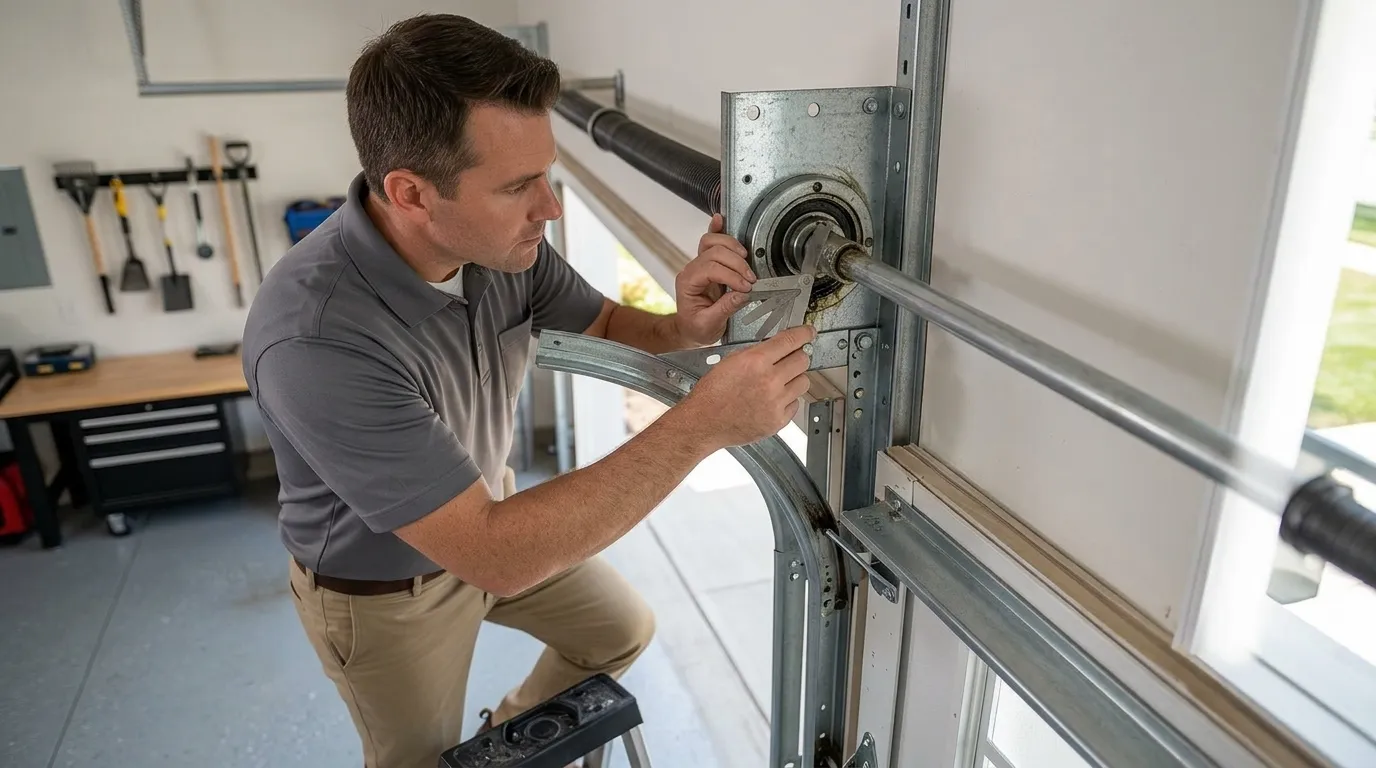
A garage door track only stays aligned if three things hold: the brackets are tight to the framing, the track itself hasn't bent, and the rollers are round and sized correctly for the gap. On a house from the 1960s or 70s, all three tend to degrade at once because they were installed together and have been flexing together for fifty-plus years.
The most common failure we see on this vintage is a bent horizontal track section near the back hanger, where the original hanger strap has stretched just enough to let the track sag half an inch. That's enough for a worn roller to catch the edge and jump out on the next cycle. Combine that with brackets that have loosened from screw fatigue and you get a door that looks fine when parked but comes off the rail the moment it's asked to travel the full curve into the horizontal run.

What Local Conditions Do
Because Orange sits in a mild band with no hard freeze and no extreme heat spike on record here, the climate itself isn't stressing the steel or the seals the way it would in a harsher zone. That's actually part of the problem: nothing forces an early failure that would get the hardware replaced sooner. A track bracket can loosen quietly for thirty years with no weather event ever calling attention to it, right up until the day it lets go.
So the driver here isn't the elements, it's simply age stacked on age. With median household income in the service area at $102,303, most owners can afford a proper hardware upgrade rather than a patch, and given how much of the local stock shares that 1960s-70s build era, that upgrade - new brackets, correctly sized rollers, a straightened or replaced track section - tends to be the right long-term move rather than repeated spot repairs.
How We Can Help
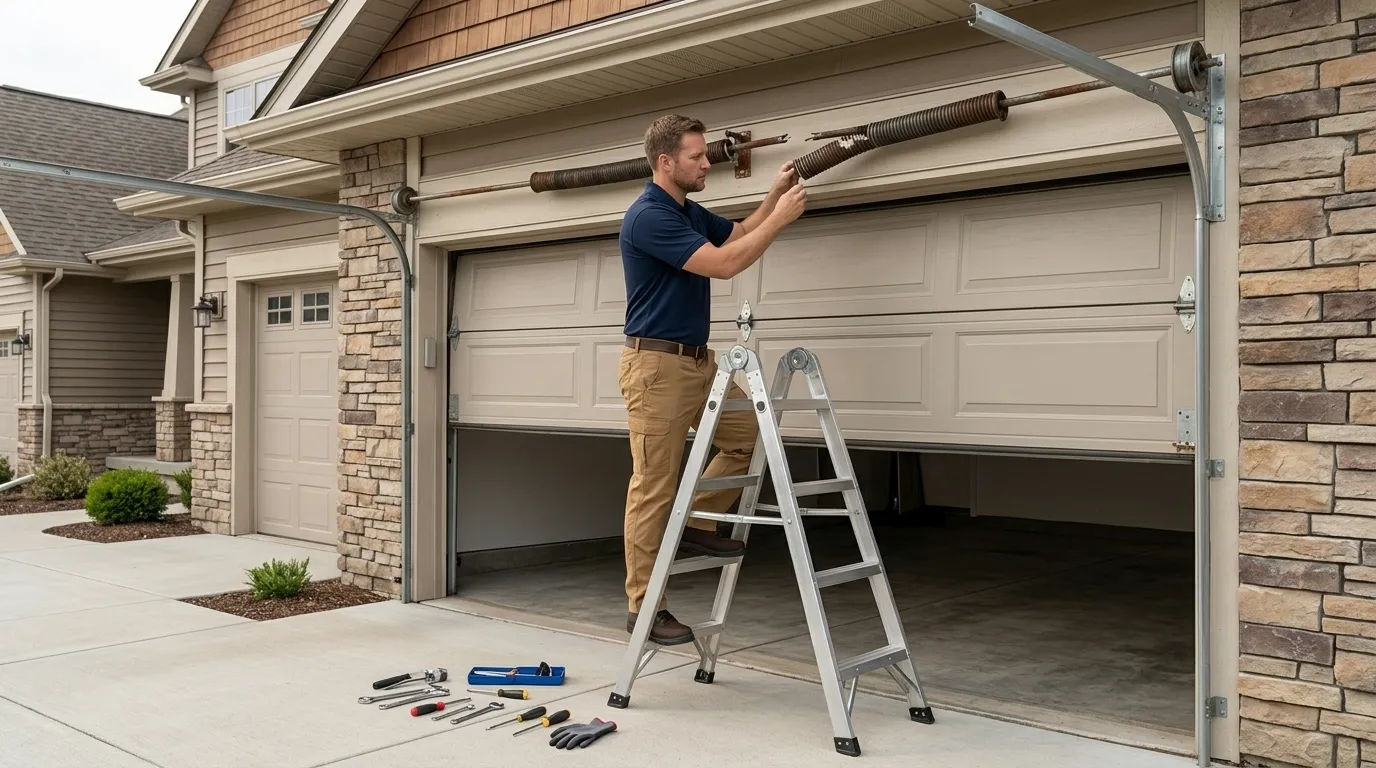
Garage Door Repair
Springs, cables, tracks, rollers, and openers fixed by a tech who explains the problem before touching anything.
Learn more →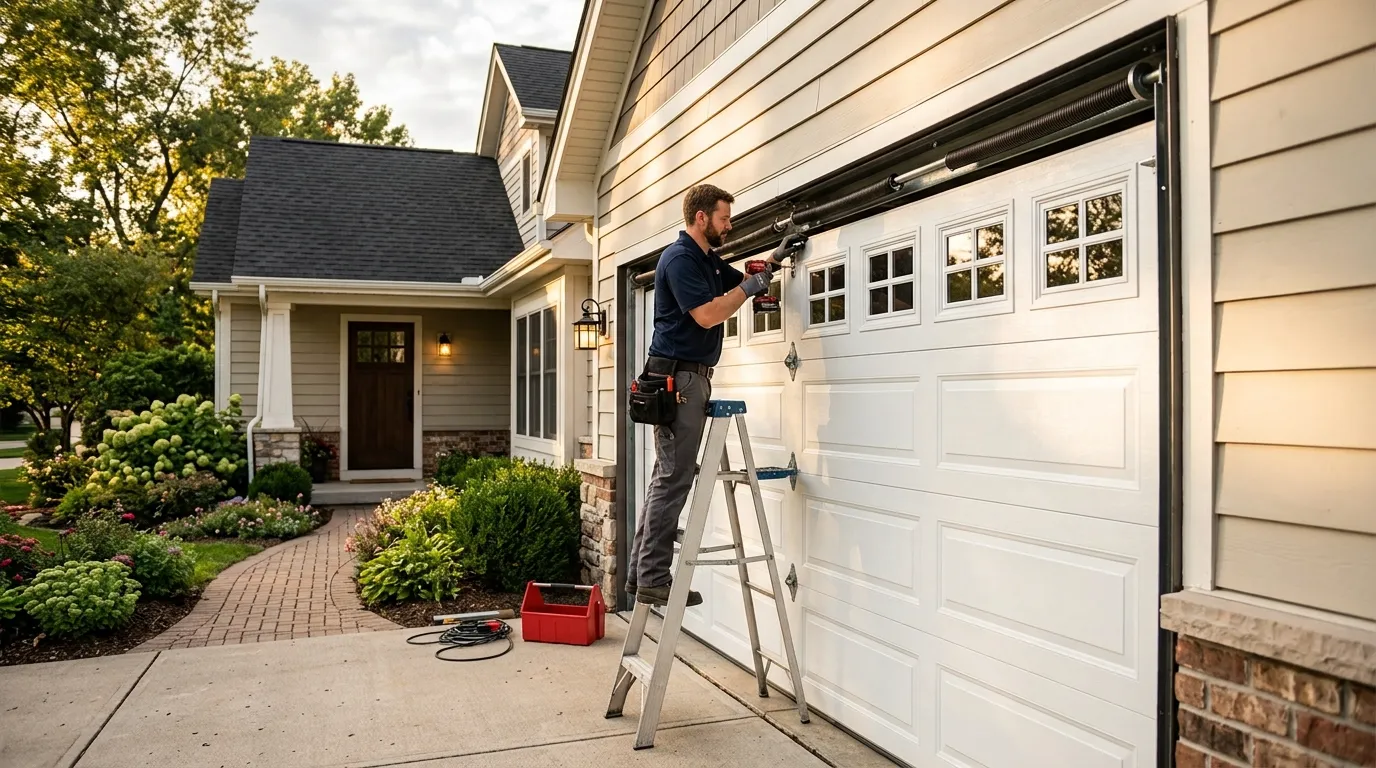
Garage Door Installation
New sectional doors sized and installed for the housing stock actually built in this area.
Learn more →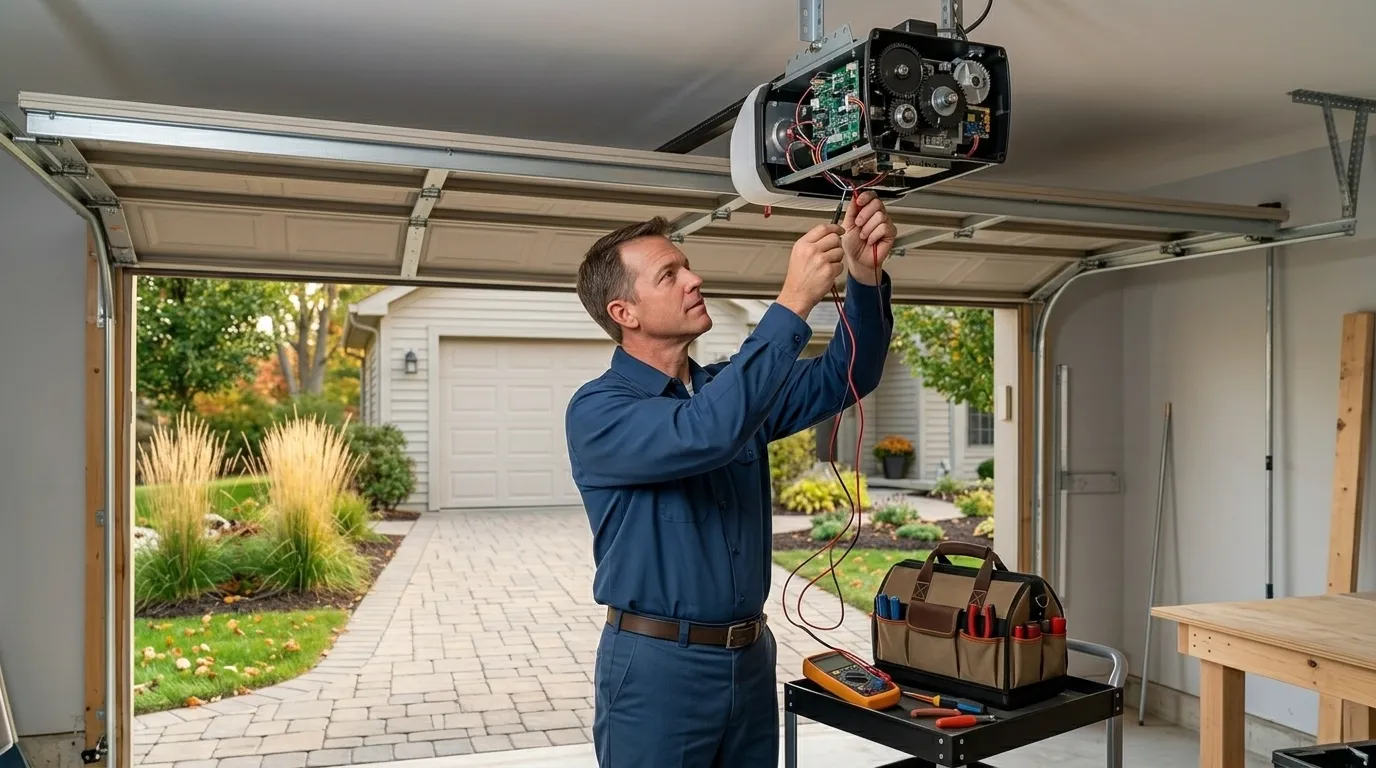
Garage Door Service
Tune-ups, lubrication, and safety checks that catch a small problem before it becomes a service call.
Learn more →Frequently Asked Questions
Is a bent track always a full replacement?
Not always. If the bend is isolated to one section and the rest of the track is straight, we can usually replace just that section and the hanger. If the whole run has sagged, which we see more on original 1960s-70s installs, replacing the full track makes more sense than patching one spot.
Why did my door come off the track with no storm or impact?
In this climate band there's rarely a weather trigger. On older Orange homes it's almost always loosened brackets or a stretched hanger strap that's been degrading quietly for years, not a single event. The door finally jumps the rail on an ordinary day because it had been close to the edge for a while.
Can I push the door back onto the track myself?
We'd rather you didn't. A door under spring tension that's off the track can drop or swing unexpectedly, and forcing rollers back into a bent section usually just re-bends it. It's a call-us situation, not a DIY one.
Have a Door That Needs a Second Opinion?
Call and describe what it is doing - we will tell you what it likely is.